


 Cart
Cart
 sales@molnova.com


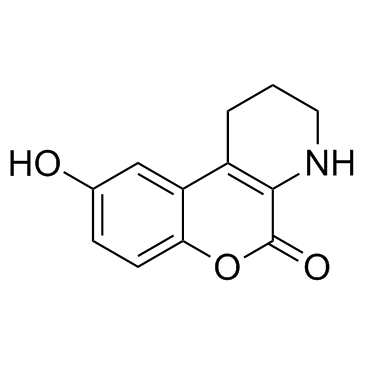
CID 797718
CAS No. 370586-05-3
CID 797718( CID 797718 | CID-797718 | CID797718 )
Catalog No. M14274 CAS No. 370586-05-3
CID-797718 is a compound with unknown details.
Purity : >98% (HPLC)
 COA
Datasheet
HNMR
HPLC
MSDS
Handing Instructions
COA
Datasheet
HNMR
HPLC
MSDS
Handing Instructions
| Size | Price / USD | Stock | Quantity |
| 1 mL x 10 mM in DMSO | 155 | In Stock |


|
| 5MG | 141 | In Stock |
|
| 10MG | 212 | In Stock |
|
| 25MG | 357 | In Stock |
|
| 50MG | 498 | In Stock |
|
| 100MG | 686 | In Stock |
|
| 200MG | 923 | In Stock |
|
| 500MG | Get Quote | In Stock |
|
| 1G | Get Quote | In Stock |
|
Biological Information
-
Product NameCID 797718
-
NoteResearch use only, not for human use.
-
Brief DescriptionCID-797718 is a compound with unknown details.
-
DescriptionCID-797718 is a compound with unknown details.
-
In Vitro——
-
In Vivo——
-
SynonymsCID 797718 | CID-797718 | CID797718
-
PathwayOthers
-
TargetOther Targets
-
RecptorOthers
-
Research AreaOther Indications
-
Indication——
Chemical Information
-
CAS Number370586-05-3
-
Formula Weight217.22
-
Molecular FormulaC12H11NO3
-
Purity>98% (HPLC)
-
SolubilityDMSO: 10 mM
-
SMILESO=C(C1=C2CCCN1)OC3=C2C=C(O)C=C3
-
Chemical Name9-Hydroxy-1,2,3,4-tetrahydro-5H-chromeno[3,4-b]pyridin-5-one
Shipping & Storage Information
-
Storage(-20℃)
-
ShippingWith Ice Pack
-
Stability≥ 2 years
Reference



-
Substance P
Substance P (SP) is an undecapeptide (a peptide composed of a chain of 11 amino acid residues) member of the tachykinin neuropeptide family.
-
Glaucine
Glaucine has antitussive antioxidative potential and antiviral activities it may be an anti-arthritic agent it can enhance LPS and zymosan-induced IL-10 production. Glaucine can inhibit the migration and invasion of human breast cancer cells by MMP-9 inhibitory activity attenuating IκBα and NF-κB activities.
-
(Pyr5,N-Me-Phe8,Sar9...
[Glp5,(Me)Phe8,Sar9] Substance P (5-11) (DiMe-C7) is a Substance P analogue that has approximately the same effects as Substance P on neurokinin 1 receptor (NK1R) in rat brain, but with a much longer duration of action. [Glp5,(Me)Phe8,Sar9] Substance P (5-11) selectively activates dopamine metabolism in the mesencephalon and midbrain cortex of the rat brain. [Glp5,(Me)Phe8,Sar9] Substance P (5-11) also increases motor activity and induces recovery of addictive agent-seeking behavior in rats.
