


 Cart
Cart
 sales@molnova.com


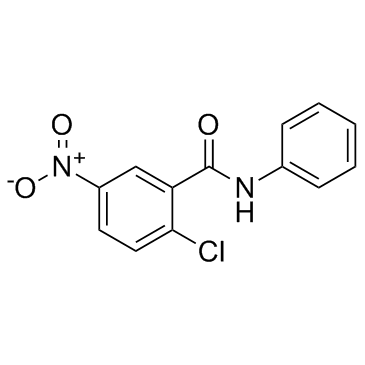
GW 9662
CAS No. 22978-25-2
GW 9662( GW9662 | GW-9662 | GW 9662 )
Catalog No. M13638 CAS No. 22978-25-2
GW9662 is a selective PPAR antagonist for PPARγ with IC50 of 3.3 nM in a cell-free assay.
Purity : >98% (HPLC)
 COA
Datasheet
HNMR
HPLC
MSDS
Handing Instructions
COA
Datasheet
HNMR
HPLC
MSDS
Handing Instructions
| Size | Price / USD | Stock | Quantity |
| 1 mL x 10 mM in DMSO | 49 | In Stock |


|
| 5MG | 45 | In Stock |
|
| 10MG | 54 | In Stock |
|
| 25MG | 87 | In Stock |
|
| 50MG | 109 | In Stock |
|
| 100MG | 202 | In Stock |
|
| 200MG | Get Quote | In Stock |
|
| 500MG | 505 | In Stock |
|
| 1G | Get Quote | In Stock |
|
Biological Information
-
Product NameGW 9662
-
NoteResearch use only, not for human use.
-
Brief DescriptionGW9662 is a selective PPAR antagonist for PPARγ with IC50 of 3.3 nM in a cell-free assay.
-
DescriptionGW9662 is a selective PPAR antagonist for PPARγ with IC50 of 3.3 nM in a cell-free assay, with at least 100 to 1000-fold functional selectivity in cells with PPARγ versus PPARα and PPARδ.(In Vitro):GW9662 inhibits radioligand binding to PPARγ, PPARα, and PPARδ with pIC50s of 8.48±0.27 (IC50=3.3 nM; n=10), 7.49±0.17 (IC50=32 nM; n=9), and 5.69±0.17 (IC50=2000 nM; n=3), respectively. GW9662 has nanomolar IC50 versus PPARγ and is 10- and 600-fold less potent in binding experiments using PPARα and PPARδ, respectively. In cell-based reporter assays, GW9662 is a potent and selective antagonist of full-length PPARγ. Co-treatment with both 50 μM BRL 49653 and 10 μM GW9662 results in statistically lower viable cell numbers after 7 days when compared to treatment with either 50 μM BRL 49653 (P=0.001) or 10 μM GW9662 (P=0.01) alone.(In Vivo):Bone marrow (BM) nucleated cell counts in both BADGE- and GW9662(1 mg/kg, i.p.)-treated mice are significantly higher than counts in the aplastic anemia (AA) group. GW9662 (1 mg/kg, i.p.) largely attenuates the renoprotective effects of Lipopolysaccharide (LPS) in the rat.
-
In VitroGW9662 inhibits radioligand binding to PPARγ, PPARα, and PPARδ with pIC50s of 8.48±0.27 (IC50=3.3 nM; n=10), 7.49±0.17 (IC50=32 nM; n=9), and 5.69±0.17 (IC50=2000 nM; n=3), respectively. GW9662 has nanomolar IC50 versus PPARγ and is 10- and 600-fold less potent in binding experiments using PPARα and PPARδ, respectively. In cell-based reporter assays, GW9662 is a potent and selective antagonist of full-length PPARγ. Co-treatment with both 50 μM BRL 49653 and 10 μM GW9662 results in statistically lower viable cell numbers after 7 days when compared to treatment with either 50 μM BRL 49653 (P=0.001) or 10 μM GW9662 (P=0.01) alone.
-
In VivoBone marrow (BM) nucleated cell counts in both BADGE- and GW9662(1 mg/kg, i.p.)-treated mice are significantly higher than counts in the aplastic anemia (AA) group. GW9662 (1 mg/kg, i.p.) largely attenuates the renoprotective effects of Lipopolysaccharide (LPS) in the rat.
-
SynonymsGW9662 | GW-9662 | GW 9662
-
PathwayMetabolic Enzyme/Protease
-
TargetPPAR
-
RecptorPPARα| PPARγ| PPARδ
-
Research AreaCancer
-
Indication——
Chemical Information
-
CAS Number22978-25-2
-
Formula Weight276.68
-
Molecular FormulaC13H9ClN2O3
-
Purity>98% (HPLC)
-
SolubilityDMSO: 55 mg/mL (198.78 mM)
-
SMILESO=C(NC1=CC=CC=C1)C2=CC([N+]([O-])=O)=CC=C2Cl
-
Chemical Name2-Chloro-5-nitro- N -phenylbenzamide
Shipping & Storage Information
-
Storage(-20℃)
-
ShippingWith Ice Pack
-
Stability≥ 2 years
Reference
1.Collino M, et al. Kidney Int, 2005, 68(2), 529-536.
2. Seargent JM, et al. Br J Pharmacol, 2004, 143(8), 933-937.
molnova catalog



related products
-
Farglitazar
Farglitazar (GI-262570) is a PPAR-γ agonist and insulin sensitizer that inhibits stellate cell activation by activating receptor γ via oxidative enzymes proliferators and is used in the study of diabetes.
-
GW1929
GW1929 is a potent PPAR-γ agonist (pKi: 8.84 for human PPAR-γ; pEC50s of 8.56 and 8.27 for human and murine PPAR-γ).
-
GW7647
GW7647 is a potent agonist of PPARα (EC50s: 6 nM, 1.1 μM, and 6.2 μM for human PPARα, PPARγ, and PPARδ, respectively).GW7647 (50 nM) stimulates the PI3K phosphorylation followed by the Akt (Ser473) phosphorylation, which causes NOS1 phosphorylation increased the amounts of NO released in the stripped antral mucosa.
