


 Cart
Cart
 sales@molnova.com


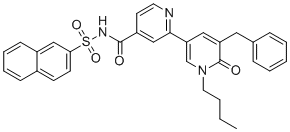
SERCA2a activator A
CAS No. 2139330-34-8
SERCA2a activator A( Compound A )
Catalog No. M13416 CAS No. 2139330-34-8
SERCA2a activator A is a novel sarco/endoplasmic reticulum Ca2+-dependent ATPase 2a (SERCA2a) activator.
Purity : >98% (HPLC)
 COA
Datasheet
HNMR
HPLC
MSDS
Handing Instructions
COA
Datasheet
HNMR
HPLC
MSDS
Handing Instructions
| Size | Price / USD | Stock | Quantity |
| 1 mL x 10 mM in DMSO | 563 | In Stock |


|
| 5MG | 471 | In Stock |
|
| 10MG | 660 | In Stock |
|
| 25MG | 1036 | In Stock |
|
| 50MG | 1451 | In Stock |
|
| 100MG | 2027 | In Stock |
|
| 200MG | Get Quote | In Stock |
|
| 500MG | Get Quote | In Stock |
|
| 1G | Get Quote | In Stock |
|
Biological Information
-
Product NameSERCA2a activator A
-
NoteResearch use only, not for human use.
-
Brief DescriptionSERCA2a activator A is a novel sarco/endoplasmic reticulum Ca2+-dependent ATPase 2a (SERCA2a) activator.
-
DescriptionSERCA2a activator A is a novel sarco/endoplasmic reticulum Ca2+-dependent ATPase 2a (SERCA2a) activator that activates the Ca2+-dependent ATPase activity of cardiac SR vesicles but not that of skeletal muscle SR vesicles that lack of phospholamban (PLN); binds to PLN (Kd=75 uM), attenuates its inhibition of SERCA2a; enhances systolic and diastolic functions in rat hearts.
-
In VitroSERCA2a activator 1 (Compound A) activates the Ca2+-dependent ATPase activity of cardiac sarcoplasmic reticulum (SR) vesicles but not that of skeletal muscle SR vesicles that lack phospholamban (PLN). The surface plasmon resonance assay reveals a direct interaction between SERCA2a activator 1 and PLN, suggesting that the binding of SERCA2a activator 1 to PLN attenuates its inhibition of SERCA2a, resulting in SERCA2a activation. SERCA2a activator 1 also increases the Ca2+ transients and contraction and relaxation of isolated adult rat cardiomyocytes. In isolated perfused rat hearts, the SERCA2a activator 1 enhances systolic and diastolic functions.
-
In VivoSERCA2a activator 1 (Compound A; 30mg/kg; intravenous injection; male Wistar rats) treatment significantly enhances the diastolic function in anesthetized normal rats. Animal Model:Male Wistar rats (7-8 weeks old) Dosage:30mg/kg Administration:Intravenous injection Result:Significantly enhanced the diastolic function in anesthetized normal rats.
-
SynonymsCompound A
-
PathwayGPCR/G Protein
-
TargetCalcium Channel
-
RecptorCalcium Channel
-
Research Area——
-
Indication——
Chemical Information
-
CAS Number2139330-34-8
-
Formula Weight551.661
-
Molecular FormulaC32H29N3O4S
-
Purity>98% (HPLC)
-
SolubilityIn Vitro:?DMSO : 62.5 mg/mL (113.29 mM)
-
SMILESO=C(C1=CC(C(C=C2CC3=CC=CC=C3)=CN(CCCC)C2=O)=NC=C1)NS(=O)(C4=CC=C5C=CC=CC5=C4)=O
-
Chemical Name5'-benzyl-1'-butyl-N-(naphthalen-2-ylsulfonyl)-6'-oxo-1',6'-dihydro-[2,3'-bipyridine]-4-carboxamide
Shipping & Storage Information
-
Storage(-20℃)
-
ShippingWith Ice Pack
-
Stability≥ 2 years
Reference
1. Kaneko M, et al. Eur J Pharmacol. 2017 Nov 5;814:1-8.
molnova catalog



related products
-
Nilvadipine
Nilvadipine is a calcium channel blocker (CCB) for treatment of hypertension.
-
6-Methoxyluteolin
6-Methoxyluteolin has antioxidant activity, it is a potent inhibitor of histamine release and calcium influx via down-regulation of the FcεRI α chain.Using the human basophilic KU812F cells, we assessed the inhibitory effects of 6-Methoxyluteolin, isolated from Chrysanthemum zawadskii, in the FcαμRI-mediated allergic reaction.
-
DHBP dibromide
DHBP dibromide is calcium release and a muscle relaxant inhibitor.
