


 Cart
Cart
 sales@molnova.com


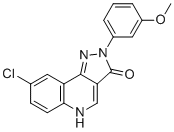
LAU159
CAS No. 2055050-87-6
LAU159( LAU 159 )
Catalog No. M13189 CAS No. 2055050-87-6
LAU159 is a potent, functionally selective positive modulator of α6β3γ2 GABAA receptor.
Purity : >98% (HPLC)
 COA
Datasheet
HNMR
HPLC
MSDS
Handing Instructions
COA
Datasheet
HNMR
HPLC
MSDS
Handing Instructions
| Size | Price / USD | Stock | Quantity |
| 2MG | 163 | In Stock |


|
| 5MG | 231 | In Stock |
|
| 10MG | 417 | In Stock |
|
| 25MG | 690 | In Stock |
|
| 50MG | 918 | In Stock |
|
| 100MG | 1283 | In Stock |
|
| 200MG | Get Quote | In Stock |
|
| 500MG | 2576 | In Stock |
|
| 1G | Get Quote | In Stock |
|
Biological Information
-
Product NameLAU159
-
NoteResearch use only, not for human use.
-
Brief DescriptionLAU159 is a potent, functionally selective positive modulator of α6β3γ2 GABAA receptor.
-
DescriptionLAU159 is a potent, functionally selective positive modulator of α6β3γ2 GABAA receptor.Other Indication Phase 3 Clinical.
-
In Vitro——
-
In Vivo——
-
SynonymsLAU 159
-
PathwayMembrane Transporter/Ion Channel
-
TargetGAT
-
RecptorGAT
-
Research AreaOther Indications
-
IndicationOther Disease
Chemical Information
-
CAS Number2055050-87-6
-
Formula Weight325.752
-
Molecular FormulaC17H12ClN3O2
-
Purity>98% (HPLC)
-
Solubility——
-
SMILESCOC1=CC=CC(=C1)N2C(=O)C3=CN=C4C=CC(=CC4=C3N2)Cl
-
Chemical Name8-chloro-2-(3-methoxyphenyl)-2H,3H,5H-pyrazolo[4,3-c]quinolin-3-one
Shipping & Storage Information
-
Storage(-20℃)
-
ShippingWith Ice Pack
-
Stability≥ 2 years
Reference
1. Treven M, et al. Br J Pharmacol. 2018 Feb;175(3):419-428.
molnova catalog



related products
-
KRM-II-81
KRM-II-81 is a potent, selective α1/α2/α3 GABAA receptors positive allosteric modulator with EC50 of 937 nM for α1β3γ2, negligible efficacy at α4/α5/α6 GABAA receptors.
-
Acamprosate calcium
A GABA receptor agonist and modulator of glutamatergic systems; reduces alcohol consumption in animal models of alcohol addiction.
-
Carisoprodol
Carisoprodol is a centrally acting skeletal muscle relaxant of the carbamate class and produces all the effects associated with barbiturate receptor ligands.
