


 Cart
Cart
 sales@molnova.com


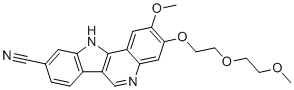
PF-05388169
CAS No. 1604034-78-7
PF-05388169( PF 05388169 | PF05388169 )
Catalog No. M12302 CAS No. 1604034-78-7
A potent, selective IRAK4 inhibitor with IC50 of 0.094 nM.
Purity : >98% (HPLC)
 COA
Datasheet
HNMR
HPLC
MSDS
Handing Instructions
COA
Datasheet
HNMR
HPLC
MSDS
Handing Instructions
| Size | Price / USD | Stock | Quantity |
| 5MG | 873 | Get Quote |


|
| 50MG | 1782 | Get Quote |
|
| 100MG | 2250 | Get Quote |
|
| 200MG | Get Quote | Get Quote |
|
| 500MG | Get Quote | Get Quote |
|
| 1G | Get Quote | Get Quote |
|
Biological Information
-
Product NamePF-05388169
-
NoteResearch use only, not for human use.
-
Brief DescriptionA potent, selective IRAK4 inhibitor with IC50 of 0.094 nM.
-
DescriptionA potent, selective IRAK4 inhibitor with IC50 of 0.094 nM, >500-fold selectivity over IRAK1 (IC50=65 nM); exhibits low nM potency in LPS- and R848-induced cytokine assays (IC50=85 nM) in human PBMCs; inhibits LPS-induced TNFα in an in vivo murine model.
-
In Vitro——
-
In Vivo——
-
SynonymsPF 05388169 | PF05388169
-
PathwayImmunology/Inflammation
-
TargetIRAK
-
RecptorIRAK
-
Research Area——
-
Indication——
Chemical Information
-
CAS Number1604034-78-7
-
Formula Weight391.427
-
Molecular FormulaC22H21N3O4
-
Purity>98% (HPLC)
-
Solubility——
-
SMILESN#CC1=CC(N2)=C(C3=C2C4=CC(OC)=C(OCCOCCOC)C=C4N=C3)C=C1
-
Chemical Name11H-Indolo[3,2-c]quinoline-9-carbonitrile, 2-methoxy-3-[2-(2-methoxyethoxy)ethoxy]-
Shipping & Storage Information
-
Storage(-20℃)
-
ShippingWith Ice Pack
-
Stability≥ 2 years
Reference
1. Lai CY, et al. J Immunol Res. 2017;2017:7807313.
molnova catalog



related products
-
PF-05387252
A potent, selective IRAK4 inhibitor with IC50 of 1.3 nM, 200-fold selectivity over IRAK1 (IC50=290 nM).
-
PF-06650833
PF-06650833 (PF06650833) is a potent and selective IRAK4 inhibitor with IC50 of 0.2 nM.
-
Zabedosertib
Zabedosertib (BAY 1834845) is an inhibitor of IRAK4 with immunomodulatory potential. Zabedosertib protects against acute respiratory distress syndrome, a new study suggests.
