


 Cart
Cart
 sales@molnova.com


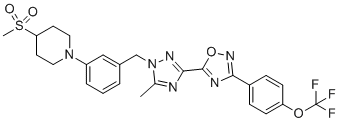
IACS-010759
CAS No. 1570496-34-2
IACS-010759( IACS010759 )
Catalog No. M12242 CAS No. 1570496-34-2
IACS-010759 (IACS010759) is a small molecule inhibitor of mitochondrial oxidative phosphorylation (OXPHOS).
Purity : >98% (HPLC)
 COA
Datasheet
HNMR
HPLC
MSDS
Handing Instructions
COA
Datasheet
HNMR
HPLC
MSDS
Handing Instructions
| Size | Price / USD | Stock | Quantity |
| 1 mL x 10 mM in DMSO | 144 | In Stock |


|
| 2MG | 64 | In Stock |
|
| 5MG | 109 | In Stock |
|
| 10MG | 168 | In Stock |
|
| 25MG | 353 | In Stock |
|
| 50MG | 500 | In Stock |
|
| 100MG | 733 | In Stock |
|
| 200MG | 995 | In Stock |
|
| 500MG | Get Quote | In Stock |
|
| 1G | Get Quote | In Stock |
|
Biological Information
-
Product NameIACS-010759
-
NoteResearch use only, not for human use.
-
Brief DescriptionIACS-010759 (IACS010759) is a small molecule inhibitor of mitochondrial oxidative phosphorylation (OXPHOS).
-
DescriptionIACS-010759 (IACS010759) is a small molecule inhibitor of mitochondrial oxidative phosphorylation (OXPHOS), targets complex I of the mitochondrial electron transport chain; decreases cell viability and increases apoptosis with EC50 values between 1 nM-50 nM across multiple lines; robustly inhibits proliferation and induces apoptosis in models of brain cancer and acute myeloid leukemia (AML) reliant on OXPHOS, reduces aspartate production that leads to impaired nucleotide biosynthesis; potently inhibits tumor growth of brain cancer and AML in vivo.Blood Cancer Phase 1 Clinical(In Vitro):IACS-010759 (10, 30, 100 nM; for 4 or 5 days) reduces viability and induces apoptosis in primary AML.IACS-010759 (0.001, 0.01, 0.1, 1, 10, 100, 1000 nM; 72 hurs) robustly inhibits both OCR and galactose-dependent H460 cell viability and has nearly identical IC50 values of 1.4 nM.IACS-010759 is similarly active in mouse (average IC50 = 5.6 nM), rat (IC50 = 12.2 nM), and cynomolgus monkey (IC50 = 8.7 nM) cell lines.IACS-010759 (0.01-10 μM) yieldes a maximal reduction of growth of > 50% in the majority of cancer cell lines (24 of 30 pancreatic (PDAC), 19 of 20 ovarian, 13 of 16 triple-negative breast (TNBC), 8 of 10 non-small-cell lung (NSCLC)) and a subset (11of 30 PDAC, 10 of 20 ovarian, 5 of 16 TNBC, 2 of 10 NSCLC) exhibited > 100% growth inhibition. (In Vivo):IACS-010759 (5, 10, 25 mg/kg/day; oral; for 21 d) results in tumor regression with minimal body weight loss at the 5 or 10 mg/kg dose in mice bearing NB-1 (PGD-null) subcutaneous xenografts. IACS-010759 at the 25 mg/kg dose is not tolerated.IACS-010759 HCl (10 mg/kg; orally; QD (daily) or QD×5 (5 d on/2 d off); for 35 d) increases median survival from 28 d to longer than 60 d, whereas less-frequent dosing schedules (Q2D or Q3D) enhances survival to a lesser extent.IACS-010759 (0.3 mg/kg for iv; 1 mg/kg for oral) has low plasma clearance with a high volume of distribution, resulting in a prolonged terminal half-life (>24 h).
-
In Vitro——
-
In Vivo——
-
SynonymsIACS010759
-
PathwayOthers
-
TargetOther Targets
-
RecptorcomplexIofoxidativephosphorylation
-
Research AreaCancer
-
IndicationBlood cancer
Chemical Information
-
CAS Number1570496-34-2
-
Formula Weight562.568
-
Molecular FormulaC25H25F3N6O4S
-
Purity>98% (HPLC)
-
SolubilityDMSO: 30 mg/mL), 53.3 mM ( < 1 mg/ml refers to the product slightly soluble or insoluble )
-
SMILESCC1=NC(=NN1CC2=CC(=CC=C2)N3CCC(CC3)S(=O)(=O)C)C4=NC(=NO4)C5=CC=C(C=C5)OC(F)(F)F
-
Chemical Name5-(5-methyl-1-(3-(4-(methylsulfonyl)piperidin-1-yl)benzyl)-1H-1,2,4-triazol-3-yl)-3-(4-(trifluoromethoxy)phenyl)-1,2,4-oxadiazole
Shipping & Storage Information
-
Storage(-20℃)
-
ShippingWith Ice Pack
-
Stability≥ 2 years
Reference
1. Molina JR, et al. Nat Med. 2018 Jun 11. doi: 10.1038/s41591-018-0052-4.
2. Vangapandu HV, et al. Oncotarget. 2018 May 18;9(38):24980-24991.
3. Lissanu Deribe Y, et al. Nat Med. 2018 Jun 8. doi: 10.1038/s41591-018-0019-5.
4. Jennifer Molina, et al. Abstract 4971: IACS-010759, a novel inhibitor of complex I in Phase I clinical development to target OXPHOS dependent tumors. AACR. DOI: 10.1158/1538-7445.
molnova catalog



related products
-
Bryonamide B
Bryonamide B is a cucurbitane triterpene that can be extracted from Bryonia aspera.
-
Pomalidomide 4-PEG3-...
Pomalidomide 4'-PEG3-azide is a chemically synthesized E3 ligase ligand-linker conjugate that incorporates the cereblon ligand derived from Pomalidomide, along with a linker.
-
Cinobufaginol
Cinobufaginol is a natural product.
