


 Cart
Cart
 sales@molnova.com


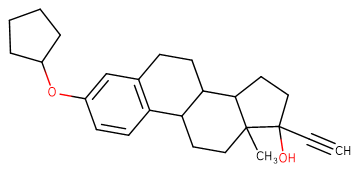
Quinestrol
CAS No. 152-43-2
Quinestrol( Estrovis | Ethynyl Estradiol-3-cyclopentyl ether | W 3566 )
Catalog No. M12128 CAS No. 152-43-2
Quinestrol is a synthetic estrogen, used in hormone replacement therapy, and occasionally to treat breast cancer and prostate cancer.
Purity : >98% (HPLC)
 COA
Datasheet
HNMR
HPLC
MSDS
Handing Instructions
COA
Datasheet
HNMR
HPLC
MSDS
Handing Instructions
| Size | Price / USD | Stock | Quantity |
| 50MG | 38 | In Stock |


|
| 100MG | 55 | In Stock |
|
| 200MG | 67 | In Stock |
|
| 500MG | Get Quote | In Stock |
|
| 1G | Get Quote | In Stock |
|
Biological Information
-
Product NameQuinestrol
-
NoteResearch use only, not for human use.
-
Brief DescriptionQuinestrol is a synthetic estrogen, used in hormone replacement therapy, and occasionally to treat breast cancer and prostate cancer.
-
DescriptionQuinestrol is a synthetic estrogen, used in hormone replacement therapy, and occasionally to treat breast cancer and prostate cancer.
-
In Vitro——
-
In Vivo——
-
SynonymsEstrovis | Ethynyl Estradiol-3-cyclopentyl ether | W 3566
-
PathwayEndocrinology/Hormones
-
TargetEstrogen Receptor/ERR
-
RecptorER
-
Research AreaEndocrinology
-
Indication——
Chemical Information
-
CAS Number152-43-2
-
Formula Weight364.53
-
Molecular FormulaC25H32O2
-
Purity>98% (HPLC)
-
SolubilityWater: 10 mM
-
SMILESCC12CCC3C(C1CCC2(C#C)O)CCC4=C3C=CC(=C4)OC5CCCC5
-
Chemical Name(8R,9S,13S,14S,17R)-3-cyclopentyloxy-17-ethynyl-13-methyl-7,8,9,11,12,14,15,16-octahydro-6H-cyclopenta[a]phenanthren-17-ol
Shipping & Storage Information
-
Storage(-20℃)
-
ShippingWith Ice Pack
-
Stability≥ 2 years
Reference
1.Shyu C, et al. Toxicol Appl Pharmacol. 2010 Nov 12.
molnova catalog



related products
-
Medicarpin (b)
(+)-Medicarpin potently inhibits osteoclastogenesis and promotes bone healing and increases bone mass by osteoblast differentiation with estrogen receptor (ER) β-mediated osteogenic action.
-
Astragaloside IV
Astragaloside IV is generally considered to be the primary active ingredient in Astragalus extract,an herbal extract which has been famous for literally thousands of years for its anti-aging properties.
-
Liquiritigenin
Liquiritigenin, a flavonoid aglycone from licorice, has a choleretic effect and the ability to induce hepatic transporters and phase-II enzymes
