


 Cart
Cart
 sales@molnova.com


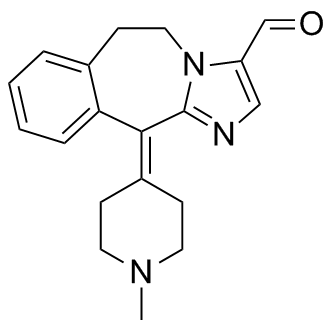
Alcaftadine
CAS No. 147084-10-4
Alcaftadine( R-89674 )
Catalog No. M12016 CAS No. 147084-10-4
A H1 histamine receptor antagonist that used for prevention of allergic conjunctivitis.
Purity : >98% (HPLC)
 COA
Datasheet
HNMR
HPLC
MSDS
Handing Instructions
COA
Datasheet
HNMR
HPLC
MSDS
Handing Instructions
| Size | Price / USD | Stock | Quantity |
| 1 mL x 10 mM in DMSO | 28 | In Stock |


|
| 10MG | 28 | In Stock |
|
| 25MG | 60 | In Stock |
|
| 50MG | 91 | In Stock |
|
| 100MG | 127 | In Stock |
|
| 200MG | 203 | In Stock |
|
| 500MG | Get Quote | In Stock |
|
| 1G | Get Quote | In Stock |
|
Biological Information
-
Product NameAlcaftadine
-
NoteResearch use only, not for human use.
-
Brief DescriptionA H1 histamine receptor antagonist that used for prevention of allergic conjunctivitis.
-
DescriptionA H1 histamine receptor antagonist that used for prevention of allergic conjunctivitis.Allergy Approved.
-
In Vitro——
-
In Vivo——
-
SynonymsR-89674
-
PathwayGPCR/G Protein
-
TargetHistamine Receptor
-
RecptorH1receptor|H2receptor|H4receptor
-
Research AreaInflammation/Immunology
-
IndicationAllergy
Chemical Information
-
CAS Number147084-10-4
-
Formula Weight307.3895
-
Molecular FormulaC19H21N3O
-
Purity>98% (HPLC)
-
SolubilityDMSO: ≥ 40 mg/mL
-
SMILESO=CC1=CN=C2/C(C3=CC=CC=C3CCN12)=C4CCN(C)CC/4
-
Chemical Name5H-Imidazo[2,1-b][3]benzazepine-3-carboxaldehyde, 6,11-dihydro-11-(1-methyl-4-piperidinylidene)-
Shipping & Storage Information
-
Storage(-20℃)
-
ShippingWith Ice Pack
-
Stability≥ 2 years
Reference
molnova catalog



related products
-
Pitolisant hydrochlo...
A potent and selective antagonist of H3 receptor with Ki/EC50 of 0.16/1.5 nM.
-
LML-134
LML-134 is an inverse agonist of Histamine 3 receptor (H3R)(hH3R cAMP and hH3R bdg with Kis of 0.3 nM and 12 nM).
-
Chlorphenoxamine
Chlorphenoxamine is an antihistamine and anticholinergic used as an antipruritic and antiparkinsonian agent.
