


 Cart
Cart
 sales@molnova.com


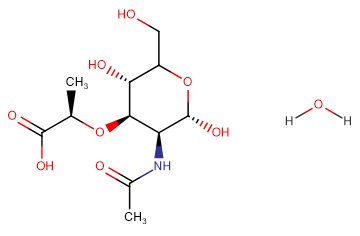
N-Acetylneuraminic acid
CAS No. 131-48-6
N-Acetylneuraminic acid( NANA | Neu5Ac )
Catalog No. M11267 CAS No. 131-48-6
N-Acetylneuraminic acid (Neu5Ac or NANA) is the predominant sialic acid found in mammalian cells.
Purity : >98% (HPLC)
 COA
Datasheet
HNMR
HPLC
MSDS
Handing Instructions
COA
Datasheet
HNMR
HPLC
MSDS
Handing Instructions
| Size | Price / USD | Stock | Quantity |
| 1 mL x 10 mM in DMSO | 43 | In Stock |


|
| 100MG | 45 | In Stock |
|
| 200MG | Get Quote | In Stock |
|
| 500MG | Get Quote | In Stock |
|
| 1G | 63 | In Stock |
|
Biological Information
-
Product NameN-Acetylneuraminic acid
-
NoteResearch use only, not for human use.
-
Brief DescriptionN-Acetylneuraminic acid (Neu5Ac or NANA) is the predominant sialic acid found in mammalian cells.
-
DescriptionN-Acetylneuraminic acid (Neu5Ac or NANA) is the predominant sialic acid found in mammalian cells.
-
In Vitro——
-
In Vivo——
-
SynonymsNANA | Neu5Ac
-
PathwayOthers
-
TargetOther Targets
-
RecptorOthers
-
Research AreaCardiovascular Disease
-
Indication——
Chemical Information
-
CAS Number131-48-6
-
Formula Weight309.27
-
Molecular FormulaC11H19NO9
-
Purity>98% (HPLC)
-
SolubilityWater: 10 mM
-
SMILESOCC1O[C@H](O)[C@@H](NC(C)=O)[C@@H](O[C@@H](C(O)=O)C)[C@@H]1O.[H]O[H]
-
Chemical Name(2R)-2-(((2S,3S,4R,5S)-3-acetamido-2,5-dihydroxy-6-(hydroxymethyl)tetrahydro-2H-pyran-4-yl)oxy)propanoic acid hydrate
Shipping & Storage Information
-
Storage(-20℃)
-
ShippingWith Ice Pack
-
Stability≥ 2 years
Reference
1.Severi E, et al. Microbiology. 2007 Sep;153(Pt 9):2817-22.
molnova catalog



related products
-
Dinoprost Tromethami...
Dinoprost(Prostaglandin F2α) tromethamine salt is a naturally occurring prostaglandin used in medicine to induce labor and as an abortifacient.
-
Huzhangoside D
Huzhangoside D is a saponin compound isolated from the roots and rhizomes of Clematis graveolens.
-
Stachydrine Hydrochl...
Stachydrine Hydrochloride is an effective component that mainly extracted from the leaf of Leonurussibiricus.
