


 Cart
Cart
 sales@molnova.com


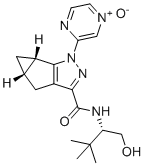
APD-371
CAS No. 1268881-20-4
APD-371( Olorinab | APD371 | APD 371 )
Catalog No. M11128 CAS No. 1268881-20-4
APD-371 (APD371, Olorinab) is a potent, selective and orally available CB2 agonist with EC50 of 6.2 nM; displays no activity against CB1 receptors (EC50>10 uM).
Purity : >98% (HPLC)
 COA
Datasheet
HNMR
HPLC
MSDS
Handing Instructions
COA
Datasheet
HNMR
HPLC
MSDS
Handing Instructions
| Size | Price / USD | Stock | Quantity |
| 5MG | 116 | In Stock |


|
| 10MG | 187 | In Stock |
|
| 25MG | 377 | In Stock |
|
| 50MG | 548 | In Stock |
|
| 100MG | Get Quote | In Stock |
|
| 200MG | Get Quote | In Stock |
|
| 500MG | Get Quote | In Stock |
|
| 1G | Get Quote | In Stock |
|
Biological Information
-
Product NameAPD-371
-
NoteResearch use only, not for human use.
-
Brief DescriptionAPD-371 (APD371, Olorinab) is a potent, selective and orally available CB2 agonist with EC50 of 6.2 nM; displays no activity against CB1 receptors (EC50>10 uM).
-
DescriptionAPD-371 (APD371, Olorinab) is a potent, selective and orally available CB2 agonist with EC50 of 6.2 nM; displays no activity against CB1 receptors (EC50>10 uM); exhibits activity in rat model of osteoarthritis pain.Pain Phase 2 Clinical.
-
In VitroA comprehensive in vitro profile of Olorinab (APD 371) (6) shows that single digit nanomolar potency and full intrinsic efficacy are maintained in all species assessed, and that Olorinab (APD 371) is highly selective for CB2 over CB1 in both binding and functional assays. Furthermore, Olorinab (APD 371) induces efficient receptor internalization (~106% relative to the CB1/2 agonist CP55,940) in CHO cells expressing HA-tagged rat CB2 suggesting that, according to the hypothesis, Olorinab (APD 371) would be able to drive agonist-induced receptor recycling.
-
In VivoOlorinab (APD 371) significantly increases paw withdrawal thresholds at doses ≥3 mg/kg PO (ED50=2.3 mg/kg). In a separate experiment, a single dose of Olorinab (APD 371) (10 mg/kg, PO) inhibits paw withdrawal threshold for up to 4 hours after administration. Seperately, the analgesic effects of Olorinab (APD 371) are shown to be highly likely mediated via activity at CB2 receptors.
-
SynonymsOlorinab | APD371 | APD 371
-
PathwayGPCR/G Protein
-
TargetCannabinoid Receptor
-
RecptorCannabinoid Receptor
-
Research AreaNeurological Disease
-
IndicationPain
Chemical Information
-
CAS Number1268881-20-4
-
Formula Weight357.414
-
Molecular FormulaC18H23N5O3
-
Purity>98% (HPLC)
-
SolubilityIn Vitro:?DMSO : 200 mg/mL (559.58 mM)
-
SMILESO=C(C1=NN(C2=C[N+]([O-])=CC=N2)C3=C1C[C@@]4([H])[C@]3([H])C4)N[C@H](CO)C(C)(C)C
-
Chemical Name3-((4aS,5aS)-3-(((S)-1-hydroxy-3,3-dimethylbutan-2-yl)carbamoyl)-4,4a,5,5a-tetrahydro-1H-cyclopropa[4,5]cyclopenta[1,2-c]pyrazol-1-yl)pyrazine 1-oxide
Shipping & Storage Information
-
Storage(-20℃)
-
ShippingWith Ice Pack
-
Stability≥ 2 years
Reference
1. Sangdon Han, et al. ACS Med. Chem. Lett., 2017, 8 (12), pp 1309-1313.
molnova catalog



related products
-
LY2828360
LY2828360 is a cannabinoid (CB) receptor 2 agonist (Ki = 40.3 nM). It selectively activates CB2 over CB1 in a GTPγS binding assay (EC50s = 20.1 and >100000 nM respectively).
-
GAT-100
GAT-100 (GAT100) is a potent, selective CB1R negative allosteric modulator (NAM) with cAMP EC50 and β-arr EC50 of 174 nM and 2.1 nM.
-
CB2R/FAAH modulator-...
CB2R/FAAH modulator-3 (compound 27) is a modulator targeting CB2R and FAAH, acting as a CB2R agonist with a Ki value of 20.1 nM and a CB1R agonist with a Ki value of 67.6 nM, while inhibiting FAAH with an IC50 value of 3.4 μM.
