


 Cart
Cart
 sales@molnova.com


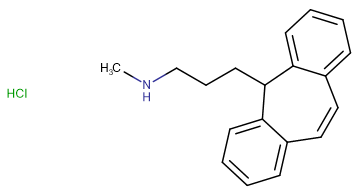
Protriptyline hydrochloride
CAS No. 1225-55-4
Protriptyline hydrochloride( —— )
Catalog No. M10865 CAS No. 1225-55-4
Protriptyline hydrochloride is a dibenzocycloheptene-derivative tricyclic antidepressant (TCA).
Purity : >98% (HPLC)
 COA
Datasheet
HNMR
HPLC
MSDS
Handing Instructions
COA
Datasheet
HNMR
HPLC
MSDS
Handing Instructions
| Size | Price / USD | Stock | Quantity |
| 5MG | 28 | In Stock |


|
| 100MG | Get Quote | In Stock |
|
| 200MG | Get Quote | In Stock |
|
| 500MG | Get Quote | In Stock |
|
| 1G | Get Quote | In Stock |
|
Biological Information
-
Product NameProtriptyline hydrochloride
-
NoteResearch use only, not for human use.
-
Brief DescriptionProtriptyline hydrochloride is a dibenzocycloheptene-derivative tricyclic antidepressant (TCA).
-
DescriptionProtriptyline hydrochloride is a dibenzocycloheptene-derivative tricyclic antidepressant (TCA). TCAs are structurally similar to phenothiazines. They contain a tricyclic ring system with an alkyl amine substituent on the central ring. In non-depressed individuals, protriptyline does not affect mood or arousal, but may cause sedation. In depressed individuals, protriptyline exerts a positive effect on mood. TCAs are potent inhibitors of serotonin and norepinephrine reuptake. In addition, TCAs down-regulate cerebral cortical β-adrenergic receptors and sensitize post-synaptic serotonergic receptors with chronic use. The antidepressant effects of TCAs are thought to be due to an overall increase in serotonergic neurotransmission. TCAs also block histamine H1 receptors, α1-adrenergic receptors and muscarinic receptors, which accounts for their sedative, hypotensive and anticholinergic effects (e.g. blurred vision, dry mouth, constipation, urinary retention), respectively. See toxicity section below for a complete listing of side effects. Protriptyline may be used for the treatment of depression.(In Vitro):Protriptyline hydrochloride (0-70 μM; 24 hours; PC3 cells) causes cytotoxicity in PC3 cells.(In Vivo):Protriptyline hydrochloride (10 mg/kg; i.p.; for 21 days; rat model of AD) improves spatial learning and retention memory in STZ treated rats.
-
In VitroProtriptyline hydrochloride (0-70 μM; 24 hours; PC3 cells) causes cytotoxicity in PC3 cells. Cell Cytotoxicity Assay Cell Line:PC3 cells Concentration:50, 60 and 70 μM Incubation Time:24 hours Result:Decreased cell viability in a concentration-dependent manner.
-
In VivoProtriptyline hydrochloride (10 mg/kg; i.p.; for 21 days; rat model of AD) improves spatial learning and retention memory in STZ treated rats. Animal Model:Rat model of ADDosage:10 mg/kg Administration:Intraperitoneal injection; for 21 days.Result:Reduced pTau, Aβ42 and BACE-1 levels, neurodegeneration, oxidative stress and glial activation. Improved p-ERK/ERK ratio and enhanced BDNF and CREB levels by reducing NFκB and GFAP expression.
-
Synonyms——
-
PathwayEndocrinology/Hormones
-
Target5-HT Receptor
-
RecptorSert (Sodium-dependent)
-
Research AreaNeurological Disease
-
Indication——
Chemical Information
-
CAS Number1225-55-4
-
Formula Weight299.84
-
Molecular FormulaC19H21N·HCl
-
Purity>98% (HPLC)
-
SolubilitySoluble in DMSO
-
SMILESCl.CNCCCC1C2=CC=CC=C2C=CC2=CC=CC=C12
-
Chemical Name——
Shipping & Storage Information
-
Storage(-20℃)
-
ShippingWith Ice Pack
-
Stability≥ 2 years
Reference
1.McDougle CJ, et al. Mol Psychiatry. 1998 May;3(3):270-3.
molnova catalog



related products
-
Lurasidone
Lurasidone is an antagonist of both dopamine D2 and 5-HT7(IC50=1.68 and 0.495 nM, respectively).It also a partial agonist of 5-HT1A receptor(IC50 : 6.75 nM).
-
Cannabigerol
Cannabigerol is a high affinity α±2-adrenergic receptor agonist, moderate affinity 5-HT1A receptor antagonist, and low affinity CB1 receptor antagonist ; also binds to the CB2 receptor; it can relieve interocular pressure, which may be of benefit in the treatment of glaucoma.
-
Lorcaserin HCl
Lorcaserin is a selective serotonin agonist that has been recently approved as a weight loss agent.
