


 Cart
Cart
 sales@molnova.com


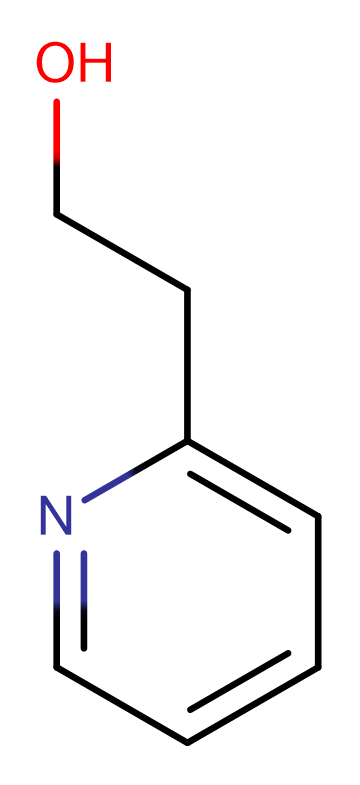
2-(2-Hydroxyethyl)pyridine
CAS No. 103-74-2
2-(2-Hydroxyethyl)pyridine( —— )
Catalog No. M10186 CAS No. 103-74-2
2-Pyridineethanol is used as an intermediate in industry.
Purity : >98% (HPLC)
 COA
Datasheet
HNMR
HPLC
MSDS
Handing Instructions
COA
Datasheet
HNMR
HPLC
MSDS
Handing Instructions
| Size | Price / USD | Stock | Quantity |
| 50MG | 43 | In Stock |


|
| 100MG | 56 | In Stock |
|
| 200MG | Get Quote | In Stock |
|
| 500MG | 128 | In Stock |
|
| 1G | 184 | In Stock |
|
Biological Information
-
Product Name2-(2-Hydroxyethyl)pyridine
-
NoteResearch use only, not for human use.
-
Brief Description2-Pyridineethanol is used as an intermediate in industry.
-
Description2-Pyridineethanol is used as an intermediate in industry.
-
In Vitro——
-
In Vivo——
-
Synonyms——
-
PathwayOthers
-
TargetOther Targets
-
RecptorOthers
-
Research Area——
-
Indication——
Chemical Information
-
CAS Number103-74-2
-
Formula Weight123.15
-
Molecular FormulaC7H9NO
-
Purity>98% (HPLC)
-
Solubilitysoluble in Ethanol
-
SMILESOCCC1=CC=CC=N1
-
Chemical Name——
Shipping & Storage Information
-
Storage(-20℃)
-
ShippingWith Ice Pack
-
Stability≥ 2 years
Reference



-
Fructo-oligosacchari...
Fructo-oligosaccharide DP10/GF9 belongs to fructooligosaccharides (FOS) with degree of polymerization (DP=10). Fructo-oligosaccharides (FOS) are composed of 9 fructose units linked by (2→1)-β-glycosidic bonds and having a single D-glucosyl unit at the non-reducing end.
-
N106
N106 directly activates the SUMO-activating enzyme, E1 ligase, and triggers intrinsic SUMOylation of SERCA2a.
-
Compound 35
Compounds 35 are superior inhibitors of Ebola (Mayinga) and Marburg (Angola) infectious viruses.Compounds 35 are superior inhibitors of Ebola (Mayinga) and Marburg (Angola) infectious viruses. Compounds 35 have shown good metabolic stability in plasma and liver microsomes (rat and human), and 32 did not inhibit CYP3A4 nor CYP2C9.
