


 Cart
Cart
 sales@molnova.com


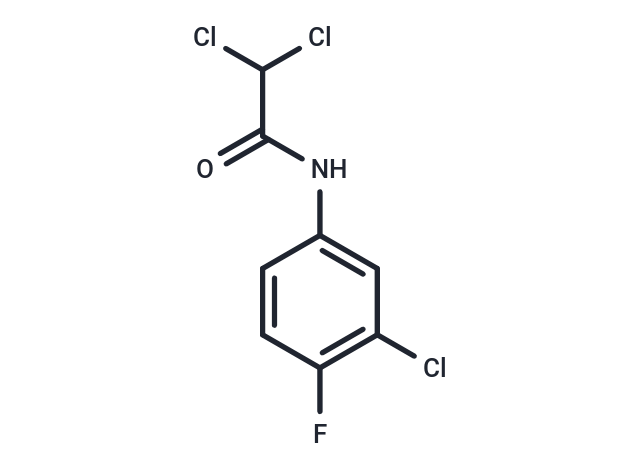
LDCA
CAS No. 349106-80-5
LDCA( —— )
Catalog No. M35413 CAS No. 349106-80-5
LDCA is a double-hit metabolic regulator that exhibits potent anti-proliferative activity. lDCA competitively inhibits LDH-A enzyme activity, alters mitochondrial hyperpolarization and simultaneously subverts apoptosis.
Purity : >98% (HPLC)
 COA
Datasheet
HNMR
HPLC
MSDS
Handing Instructions
COA
Datasheet
HNMR
HPLC
MSDS
Handing Instructions
| Size | Price / USD | Stock | Quantity |
| 5MG | 61 | In Stock |


|
| 10MG | 93 | In Stock |
|
| 25MG | 181 | In Stock |
|
| 50MG | 302 | In Stock |
|
| 100MG | 480 | In Stock |
|
| 500MG | 1035 | In Stock |
|
| 1G | Get Quote | In Stock |
|
Biological Information
-
Product NameLDCA
-
NoteResearch use only, not for human use.
-
Brief DescriptionLDCA is a double-hit metabolic regulator that exhibits potent anti-proliferative activity. lDCA competitively inhibits LDH-A enzyme activity, alters mitochondrial hyperpolarization and simultaneously subverts apoptosis.
-
DescriptionLDCA is a dual-hit metabolic modulator and inhibits LDH-A enzyme activity to stimulate apoptosis in the malignant population. LDCA can be used for the research of oncogenic progression.
-
In VitroLDCA (2-100 μM; 16-72 h) is used in combination with doxorubicin synergistically, enhances the growth inhibition and induces mitochondria-mediated apoptosis by recruiting the caspase cascade, restricting migration, and obviating the clonogenic outgrowth potential of melanoma cells.Cell Viability Assay Cell Line:B16-F10 cells Concentration:2-100 μM Incubation Time:72 h Result:Arrested cell growth with a dose-dependent cytotoxic effect and had a strong synergism with LDCA.Apoptosis Analysis Cell Line:B16-F10 cells Concentration:20 μM Incubation Time:24 h Result:Resulted 15% death when cells exposed to LDCA and caused 40% melanoma cell death combination synergistically with doxorubicin.Immunofluorescence Cell Line:B16-F10 cells Concentration:20 μM Incubation Time:16 h Result:Demonstrated thatcombination with doxorubicin resultantly affected cellular morphologywith condensed and fragmented nuclei.Cell Migration Assay Cell Line:B16-F10 cells Concentration:20 μM Incubation Time:16 h Result:Signicantly limited the migratory potential in the B16-F10 cells.
-
In VivoLDCA (2 mg/kg, iv., the 6th day, once) is used in combination with doxorubicin thwarts tumor growth kinetics to restrain oncogenic progression, thus accentuating survival in the model of murine melanoma.Animal Model:melanoma tumor model Dosage:2 mg/kg Administration:2 mg/kg, iv., the 6th day, once Result:Significantly increased mice survivability combination with doxorubicin, and relieved mice tumor necrosis phenomena.
-
Synonyms——
-
PathwayApoptosis
-
TargetApoptosis
-
RecptorApoptosis | Dehydrogenase
-
Research Area——
-
Indication——
Chemical Information
-
CAS Number349106-80-5
-
Formula Weight256.49
-
Molecular FormulaC8H5Cl3FNO
-
Purity>98% (HPLC)
-
SolubilityIn Vitro:?DMSO : 100 mg/mL (389.88 mM; Ultrasonic (<60°C)
-
SMILESN(C(C(Cl)Cl)=O)C1=CC(Cl)=C(F)C=C1
-
Chemical Name——
Shipping & Storage Information
-
Storage(-20℃)
-
ShippingWith Ice Pack
-
Stability≥ 2 years
Reference
1. Saha, Suchandrima, et al. The dual-hit metabolic modulator LDCA synergistically potentiates doxorubicin to selectively combat cancer-associated hallmarks. RSC Advances, 7(84), 53322–53333. doi:10.1039/c7ra08625c.
molnova catalog



related products
-
Triglycidyl isocyanu...
Triglycidyl isocyanurate is a triazene triepoxide with antineoplastic and antiangiogenic activity. It inhibits growth of human non-small cell lung cancer cells by activating p53. Triglycidyl isocyanurate alkylates and cross-links DNA, thereby inhibiting DNA replication. It induces cell apoptosis and can be used for cancer research.
-
Methyl pyropheophorb...
Methyl pyropheophorbide-a (MPPa) is a chlorine photosensitizer and a derivative of chlorophyll a. It is photodynamically active, induces apoptosis and inhibits tumor growth, and can be used in photodynamic therapy (PDT) of cancer.
-
Manganese chloride
Manganese chloride inhibits proliferation in a dose- and time-dependent manner induces G0/G1 and S phase arrest and apoptosis in A549 cells.
