


 Cart
Cart
 sales@molnova.com


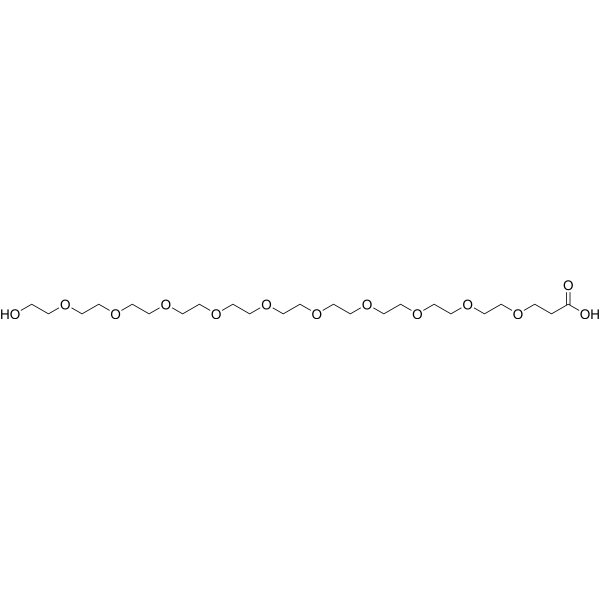
Hydroxy-PEG10-acid
CAS No. 2375611-66-6
Hydroxy-PEG10-acid( HO-PEG10-CH2CH2COOH )
Catalog No. M26966 CAS No. 2375611-66-6
Hydroxy-PEG10-acid is a PEG-based PROTAC linker that can be used to synthesize PROTACs.
Purity : >98% (HPLC)
 COA
Datasheet
HNMR
HPLC
MSDS
Handing Instructions
COA
Datasheet
HNMR
HPLC
MSDS
Handing Instructions
| Size | Price / USD | Stock | Quantity |
| 5MG | 45 | Get Quote |


|
| 10MG | 60 | Get Quote |
|
| 25MG | 87 | Get Quote |
|
| 50MG | 129 | Get Quote |
|
| 100MG | 174 | Get Quote |
|
| 200MG | Get Quote | Get Quote |
|
| 500MG | Get Quote | Get Quote |
|
| 1G | Get Quote | Get Quote |
|
Biological Information
-
Product NameHydroxy-PEG10-acid
-
NoteResearch use only, not for human use.
-
Brief DescriptionHydroxy-PEG10-acid is a PEG-based PROTAC linker that can be used to synthesize PROTACs.
-
DescriptionHydroxy-PEG10-acid is a PEG-based PROTAC linker that can be used to synthesize PROTACs.(In Vitro):PROTACs contain two different ligands connected by a linker; one is a ligand for an E3 ubiquitin ligase and the other is for the target protein.
-
In VitroPROTACs contain two different ligands connected by a linker; one is a ligand for an E3 ubiquitin ligase and the other is for the target protein. PROTACs exploit the intracellular ubiquitin-proteasome system to selectively degrade target proteins.
-
In Vivo——
-
SynonymsHO-PEG10-CH2CH2COOH
-
PathwayOthers
-
TargetOther Targets
-
RecptorPIP5K1α
-
Research Area——
-
Indication——
Chemical Information
-
CAS Number2375611-66-6
-
Formula Weight530.608
-
Molecular FormulaC23H46O13
-
Purity>98% (HPLC)
-
Solubility——
-
SMILESOCCOCCOCCOCCOCCOCCOCCOCCOCCOCCOCCC(O)=O
-
Chemical Name——
Shipping & Storage Information
-
Storage(-20℃)
-
ShippingWith Ice Pack
-
Stability≥ 2 years
Reference



-
Transdermal Peptide ...
Transdermal Peptide TFA (TD 1 Peptide TFA) is an 11-amino acid polypeptide that binds to Na+/K+ -atpase beta-subunit (ATP1B1) and interacts with the C terminal of ATP1B1.Transdermal Peptide TFA can enhance the transmission of some large molecules in the skin.
-
O-Acetyl-L-serine hy...
O-Acetylserine (OASS) is an acylated amino acid derivative. It is an intermediate in the biosynthesis of the common amino acid cysteine in bacteria and plants. Its presence in humans arises from either microbial metabolism in the gut or through consumption of foods containing OASS.
-
Chitinase, Serratia ...
Chitinase, Serratia marcescens (EC 3.2.1.14) has partial lysozyme activity and is widely found in bacteria, fungi, animals and some plants. Chitinase belongs to the glycosyl hydrolase family. Chitinase catalyzes chito-oligosaccharide hydrolysis. Chitinases also can serve as prognostic biomarkers of disease progression. Chitinase can be used in the research of pathogenesis of various human fibrotic and inflammatory disorders, particularly those of the lung (idiopathic pulmonary fibrosis, chronic obstructive pulmonary disease, sarcoidosis, and asthma) and the gastrointestinal tract (inflammatory bowel diseases (IBDs) and colon cancer).
