


 Cart
Cart
 sales@molnova.com


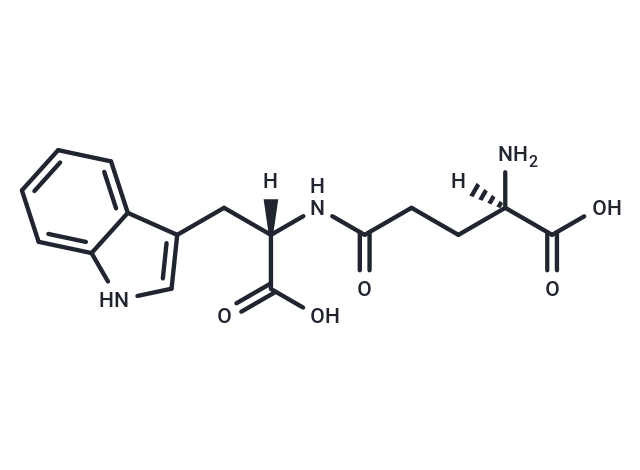
Golotimod
CAS No. 229305-39-9
Golotimod( —— )
Catalog No. M32945 CAS No. 229305-39-9
Golotimod (SCV 07) is an antimicrobial dipeptide with immunomodulatory activity that significantly improves the efficacy of anti-tuberculosis therapy.
Purity : >98% (HPLC)
 COA
Datasheet
HNMR
HPLC
MSDS
Handing Instructions
COA
Datasheet
HNMR
HPLC
MSDS
Handing Instructions
| Size | Price / USD | Stock | Quantity |
| 5MG | 49 | Get Quote |


|
| 10MG | 77 | Get Quote |
|
| 25MG | 126 | Get Quote |
|
| 50MG | 182 | Get Quote |
|
| 100MG | 260 | Get Quote |
|
| 500MG | Get Quote | Get Quote |
|
| 1G | Get Quote | Get Quote |
|
Biological Information
-
Product NameGolotimod
-
NoteResearch use only, not for human use.
-
Brief DescriptionGolotimod (SCV 07) is an antimicrobial dipeptide with immunomodulatory activity that significantly improves the efficacy of anti-tuberculosis therapy.
-
DescriptionGolotimod (SCV-07), an immunomodulating peptide with antimicrobial activity, significantly increases the efficacy of antituberculosis therapy, stimulates thymic and splenic cell proliferation, and improves macrophage function. Golotimod (SCV-07) inhibits STAT3 signaling and modulates the duration and severity of oral mucositis in animal models that received radiation or a combination of radiation and Cisplatin. Golotimod (SCV-07) is also a potential therapeutic for recurrent genital herpes simplex virus type 2 (HSV-2).
-
In Vitro——
-
In VivoGolotimod (SCV-07) (oral gavage or subcutaneous injection, 100 μg/kg, 5 days) reduces experimental recurrent genital HSV-2 disease by oral administration, more importantly, oral SCV07 after fasting shows a greater reduction in incidence and severity than SCV-07 without fasting in female hartley guinea pigs.Golotimod (SCV-07) (subcutaneous injection, once or twice a day from days 1 to 20, 100 μg/kg) can reduce the severity and duration of acute and split radiation-induced oral mucositis (OM) and short the duration of ulcerative OM in male LVG golden Syrian Hamsters.Animal Model:Female Hartley guinea pigs (250-300 g) infected HSV-2Dosage:100 μg/kg Administration:Oral gavage or subcutaneous injection; 5 days Result:Reduced incidence of lesions from 55% (one week before treatment) to only 18% by oral administration, and showed no significant reduction in disease by subcutaneous injection of SCV-07.Animal Model:Male LVG golden Syrian Hamsters weighing approximately 80 g with radiation-induced mucositis Dosage:10, 100 μg/kg or 1 mg/kg Administration: Subcutaneous injection; once or twice a day from days 1 to 20 Result:Showed a peak mucositis of 3.0 on day 18 in the control group compared to only 2.2 in the test group, and the mucositis score in the SCV-07 treated hamsters was only 6.3% compared to 28.1% in the control group at dose of 100 μg/kg.Significantly decreased the severity and duration of oral mucositis (OM) at dose of 10 μg/kg, 100 μg/kg or 1 mg/kg.
-
Synonyms——
-
PathwayMicrobiology/Virology
-
TargetAntibiotic
-
RecptorAntibiotic
-
Research Area——
-
Indication——
Chemical Information
-
CAS Number229305-39-9
-
Formula Weight333.34
-
Molecular FormulaC16H19N3O5
-
Purity>98% (HPLC)
-
SolubilityIn Vitro:?H2O : 125 mg/mL (374.99 mM; Ultrasonic)
-
SMILES[H][C@@](N)(CCC(=O)N[C@@]([H])(Cc1c[nH]c2ccccc12)C(O)=O)C(O)=O
-
Chemical Name——
Shipping & Storage Information
-
Storage(-20℃)
-
ShippingWith Ice Pack
-
Stability≥ 2 years
Reference
1. Rose WA 2nd, et al. An immunomodulating dipeptide, SCV-07, is a potential therapeutic for recurrent genital herpes simplex virus type 2 (HSV-2). Int J Antimicrob Agents. 2008 Sep;32(3):262-6.?
molnova catalog



related products
-
3-CPs
3-CPs (3-Carbethoxypsoralen) is a bleomycin-induced serotypic podoplanar polysaccharide in mouse lung fibrosis that belongs to the psoralen family and interferes with antibody-mediated bacterial killing.
-
Lasalocid sodium
Lasalocid sodium is a cationic ionophore antibiotic obtained from Streptomyces lasaliensis that, among other effects, dissociates the calcium fluxes in muscle fibers.
-
Vasicine hydrochlori...
Vasicine hydrochloride (peganine hydrochloride) is an alkaloid isolated from Justicia adhatoda. It possesses an anti-tuberculosis activity.
