


 Cart
Cart
 sales@molnova.com


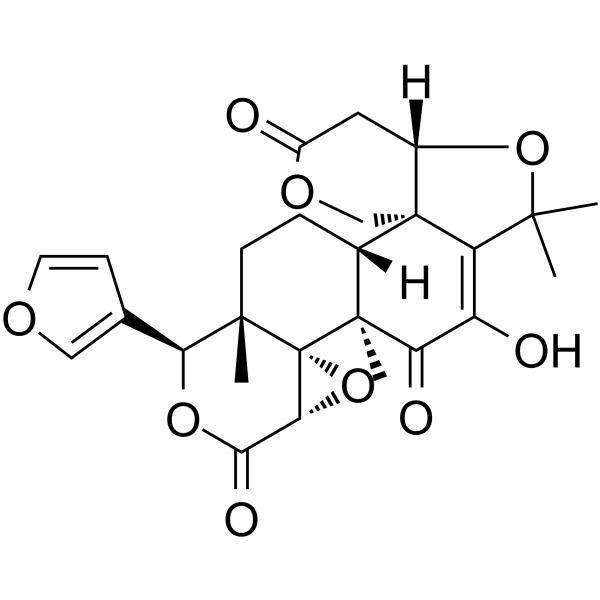
Evodol
CAS No. 22318-10-1
Evodol( —— )
Catalog No. M30899 CAS No. 22318-10-1
Evodol may as an anti-inflammatory agent or lead compound, it shows inhibitory activity on nitric oxide (NO) production in lipopolysaccharide -activated RAW264.7 macrophages.
Purity : >98% (HPLC)
 COA
Datasheet
HNMR
HPLC
MSDS
Handing Instructions
COA
Datasheet
HNMR
HPLC
MSDS
Handing Instructions
| Size | Price / USD | Stock | Quantity |
| 5MG | 610 | In Stock |


|
| 50MG | Get Quote | In Stock |
|
| 100MG | Get Quote | In Stock |
|
| 200MG | Get Quote | In Stock |
|
| 500MG | Get Quote | In Stock |
|
| 1G | Get Quote | In Stock |
|
Biological Information
-
Product NameEvodol
-
NoteResearch use only, not for human use.
-
Brief DescriptionEvodol may as an anti-inflammatory agent or lead compound, it shows inhibitory activity on nitric oxide (NO) production in lipopolysaccharide -activated RAW264.7 macrophages.
-
DescriptionEvodol may as an anti-inflammatory agent or lead compound, it shows inhibitory activity on nitric oxide (NO) production in lipopolysaccharide -activated RAW264.7 macrophages. Evodol and limonin possess larvicidal activity against the Asian tiger mosquitoes with LC50 values of 52.22 and 32.43 ug/ml, respectively.
-
In Vitro——
-
In Vivo——
-
Synonyms——
-
PathwayOthers
-
TargetOther Targets
-
Recptor——
-
Research Area——
-
Indication——
Chemical Information
-
CAS Number22318-10-1
-
Formula Weight484.5
-
Molecular FormulaC26H28O9
-
Purity>98% (HPLC)
-
Solubility——
-
SMILES——
-
Chemical Name——
Shipping & Storage Information
-
Storage(-20℃)
-
ShippingWith Ice Pack
-
Stability≥ 2 years
Reference
molnova catalog



related products
-
(R)-Nepicastat HCl
(R)-Nepicastat HCl, the R-enantiomer of Nepicastat HCl, is a potent and selective inhibitor with IC50 of 25.1 nM and 18.3 nM for bovine and human dopamine-β-hydroxylase, with negligible affinity for twelve other enzymes and thirteen neurotransmitter receptors.
-
MKC8866
MKC8866 is a selective IRE1 RNase inhibitor (IC50: 0.29?μM in human vitro).
-
Pipecolinic acid
Pipecolic acid a metabolite of lysine found in human physiological fluids such as urine plasma and CSF is an important regulator of immunity in plants and humans alike.
