


 Cart
Cart
 sales@molnova.com


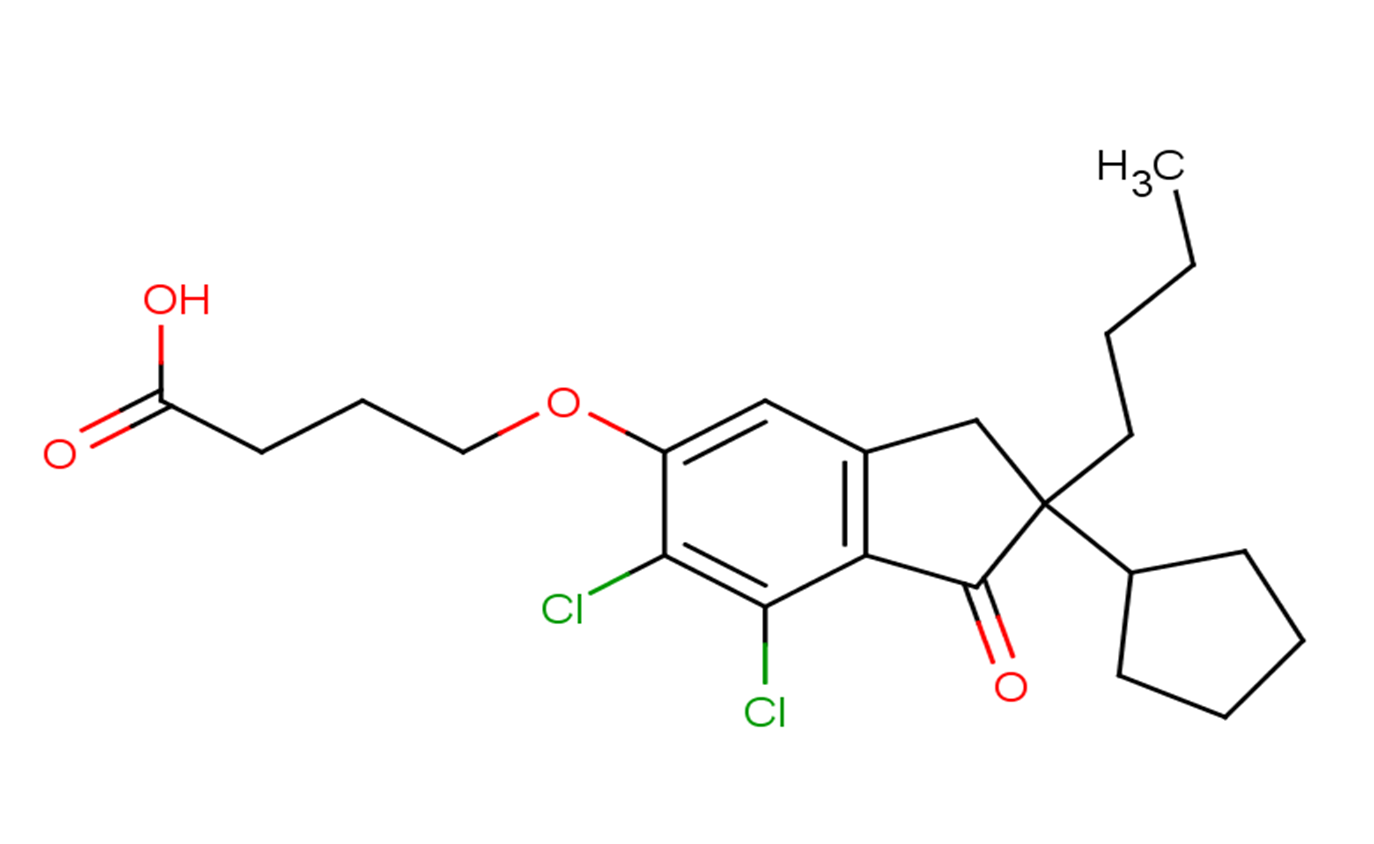
DCPIB
CAS No. 82749-70-0
DCPIB( —— )
Catalog No. M22830 CAS No. 82749-70-0
DCPIB, a known specific and potent inhibitor of volume-regulated anion channels (VRAC),DCPIB displayed superior selectivity toward TRESK with an IC50 of 0.14 μM, demonstrating at least 100-fold higher affinity over TREK1/TRAAK channels. DCPIB, a known specific and potent inhibitor of volume-regulated anion channels (VRAC), has been reported to activate TREK1 and TREK2 in astrocytes and in vitro recently.
Purity : >98% (HPLC)
 COA
Datasheet
HNMR
HPLC
MSDS
Handing Instructions
COA
Datasheet
HNMR
HPLC
MSDS
Handing Instructions
| Size | Price / USD | Stock | Quantity |
| 5MG | 61 | In Stock |


|
| 10MG | 104 | In Stock |
|
| 25MG | 222 | In Stock |
|
| 50MG | 441 | In Stock |
|
| 100MG | 573 | In Stock |
|
| 200MG | 807 | In Stock |
|
| 500MG | Get Quote | In Stock |
|
| 1G | Get Quote | In Stock |
|
Biological Information
-
Product NameDCPIB
-
NoteResearch use only, not for human use.
-
Brief DescriptionDCPIB, a known specific and potent inhibitor of volume-regulated anion channels (VRAC),DCPIB displayed superior selectivity toward TRESK with an IC50 of 0.14 μM, demonstrating at least 100-fold higher affinity over TREK1/TRAAK channels. DCPIB, a known specific and potent inhibitor of volume-regulated anion channels (VRAC), has been reported to activate TREK1 and TREK2 in astrocytes and in vitro recently.
-
DescriptionDCPIB, a known specific and potent inhibitor of volume-regulated anion channels (VRAC),DCPIB displayed superior selectivity toward TRESK with an IC50 of 0.14 μM, demonstrating at least 100-fold higher affinity over TREK1/TRAAK channels. DCPIB, a known specific and potent inhibitor of volume-regulated anion channels (VRAC), has been reported to activate TREK1 and TREK2 in astrocytes and in vitro recently. In the present study, we demonstrated DCPIB also voltage dependently activated TRAAK besides TREK1/TREK2, showing DCPIB activated all TREK subfamily members. In contrast, the compound potently inhibited several other K2P channels with no voltage dependence, including TRESK, TASK1, and TASK3. DCPIB displayed superior selectivity toward TRESK with an IC50 of 0.14 μM, demonstrating at least 100-fold higher affinity over TREK1/TRAAK channels. Furthermore, the impaired ion selectivity filter region greatly impaired the activating effect of DCPIB on TREK1 but not the inhibitory effect of DCPIB on TRESK. This indicates distinct molecular determinants underlying the effect of DCPIB on TREK1 or TRESK channels. DCPIB played diverse effects on K2P channels and could be a useful tool for further investigating structure-function studies of K2P channels.
-
In VitroImmunofluorescence Cell Line:BV2 cells Concentration:10 μM Incubation Time:3 h Result:Significantly decreased Ki67 positive staining microglia and pro-inflammatory cytokine (TNF-α, IL-1β) secretion.Western Blot Analysis Cell Line:BV2 cells Concentration:10 μM Incubation Time:3 h Result:Inhibited migratory potential of transient OGD (Oxygen-glucose deprivation) exposed BV2 cells.
-
In VivoAnimal Model:Reversible middle cerebral artery occlusion (rMCAO) model Dosage:1 mM, 10 μL Administration:Administered manually for 20s by intracerebroventricular infusion Result:Diminished Pyramidal neurons injury induced by rMCAO in the CA1 region.
-
Synonyms——
-
PathwayMembrane Transporter/Ion Channel
-
TargetChloride Channel
-
RecptorVRAC|TRESK|TASK-1|TASK-3
-
Research Area——
-
Indication——
Chemical Information
-
CAS Number82749-70-0
-
Formula Weight427.36
-
Molecular FormulaC22H28Cl2O4
-
Purity>98% (HPLC)
-
SolubilityDMSO:125 mg/mL (292.49 mM)
-
SMILESO=C(O)CCCOC1=CC2=C(C(C(C3CCCC3)(CCCC)C2)=O)C(Cl)=C1Cl
-
Chemical Name——
Shipping & Storage Information
-
Storage(-20℃)
-
ShippingWith Ice Pack
-
Stability≥ 2 years
Reference
1. Lv J, et al. DCPIB, an Inhibitor of Volume-Regulated Anion Channels, Distinctly Modulates K2P Channels. ACS Chem Neurosci. 2019 Apr 17.
molnova catalog



related products
-
NS1652
NS1652 is an anion conductance inhibitor. NS1652 blocks chloride channel has an IC50 of 1.6 μM in human and mouse red blood cells.NS1652 (20 μM) fully and reversibly inhibits the red cell Cl-conductance. NS1652 effectively inhibits the chloride conductance (IC50, 1.6 μM) in human and mouse red blood cells, but only weakly inhibits VRAC (IC50, 125 μM) in HEK293 cells. NS1652 markedly blocks the NO production (IC50: 3.1 μM in BV2 cells).
-
CLP257
CLP257 (CLP-257) is a potent, selective K+-Cl- cotransporter KCC2 activator with EC50 of 616 nM.
-
OADS
OADS is a specific, reversible, small-molecule inhibitor directs against CLC (Chloride Channel) antiporter with Ki of 29 uM.
