


 Cart
Cart
 sales@molnova.com


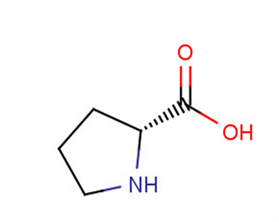
D-Proline
CAS No. 344-25-2
D-Proline( (R)-Pyrrolidine-2-carboxylic acid )
Catalog No. M20032 CAS No. 344-25-2
D-proline is an isomer of the naturally occurring amino acid L-Proline. D-amino acids have been found in relatively high abundance in human plasma and saliva. These amino acids may be of bacterial origin but there is also evidence that they are endogenously produced through amino acid racemase activity.
Purity : >98% (HPLC)
 COA
Datasheet
HNMR
HPLC
MSDS
Handing Instructions
COA
Datasheet
HNMR
HPLC
MSDS
Handing Instructions
| Size | Price / USD | Stock | Quantity |
| 500MG | 38 | In Stock |


|
| 1G | 45 | In Stock |
|
Biological Information
-
Product NameD-Proline
-
NoteResearch use only, not for human use.
-
Brief DescriptionD-proline is an isomer of the naturally occurring amino acid L-Proline. D-amino acids have been found in relatively high abundance in human plasma and saliva. These amino acids may be of bacterial origin but there is also evidence that they are endogenously produced through amino acid racemase activity.
-
DescriptionD-proline is an isomer of the naturally occurring amino acid L-Proline. D-amino acids have been found in relatively high abundance in human plasma and saliva. These amino acids may be of bacterial origin but there is also evidence that they are endogenously produced through amino acid racemase activity.
-
In Vitro——
-
In Vivo——
-
Synonyms(R)-Pyrrolidine-2-carboxylic acid
-
PathwayOthers
-
TargetOther Targets
-
RecptorOthers
-
Research Area——
-
Indication——
Chemical Information
-
CAS Number344-25-2
-
Formula Weight115.13
-
Molecular FormulaC5H9NO2
-
Purity>98% (HPLC)
-
SolubilityWater:199.8 mM
-
SMILESOC(=O)[C@H]1CCCN1
-
Chemical Name——
Shipping & Storage Information
-
Storage(-20℃)
-
ShippingWith Ice Pack
-
Stability≥ 2 years
Reference
1.Nagata Y et al. The presence of high concentrations of free D-amino acids in human saliva. Life Sci. 2006 Mar 6;78(15):1677-81.
molnova catalog



related products
-
2-Ethylhexyl trans-4...
2-Ethylhexyl trans-4-methoxycinnamate is a sunscreen agent.
-
DL-Alanine
DL-Alanine is an amino acid that is a racemic compound of L- and D-alanine.DL-Alanine is often used as a reducing and capping agent in conjunction with aqueous silver nitrate for nanoparticle generation.DL-Alanine is a sweetening agent, and can be grouped with glycine and sodium saccharin.
-
N-Formyl-Met-Leu-Phe...
N-Formyl-Met-Leu-Phe-Lys (fMLFK) is a peptide, acts as a potent and selective agonist of FPR1, with EC50s of 3.5 nM, 6.7 μM and 0.88 μM for FPR1, FPR2 and FPR2-D2817.32G, respectively.
