


 Cart
Cart
 sales@molnova.com


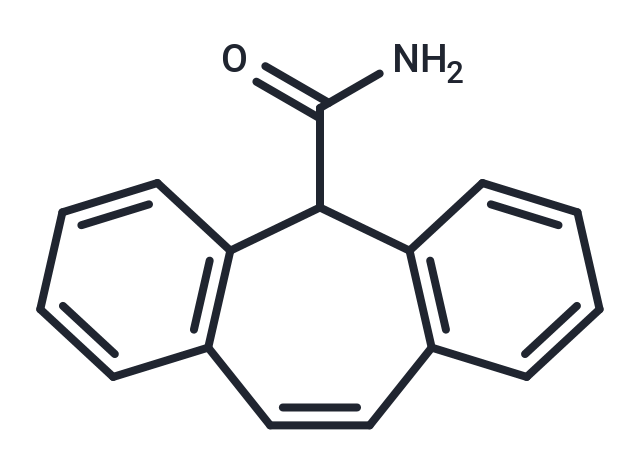
Citenamide
CAS No. 10423-37-7
Citenamide( —— )
Catalog No. M33319 CAS No. 10423-37-7
Citenamide (AY-15613) has anticancer and anticonvulsant activity and is used in the study of neurological disorders because of its sleep-promoting properties.
Purity : >98% (HPLC)
 COA
Datasheet
HNMR
HPLC
MSDS
Handing Instructions
COA
Datasheet
HNMR
HPLC
MSDS
Handing Instructions
| Size | Price / USD | Stock | Quantity |
| 2MG | 248 | Get Quote |


|
| 5MG | 312 | Get Quote |
|
| 10MG | 528 | Get Quote |
|
| 25MG | 994 | Get Quote |
|
| 50MG | 1334 | Get Quote |
|
| 100MG | 1764 | Get Quote |
|
| 500MG | 3528 | Get Quote |
|
| 1G | Get Quote | Get Quote |
|
Biological Information
-
Product NameCitenamide
-
NoteResearch use only, not for human use.
-
Brief DescriptionCitenamide (AY-15613) has anticancer and anticonvulsant activity and is used in the study of neurological disorders because of its sleep-promoting properties.
-
DescriptionCitenamide is an anticonvulsant.
-
In Vitro——
-
In VivoCitenamide (Cytenamide, CYT) is an analogue of Carbamazepine (CBZ), a dibenzazepine drug used to control seizures.
-
Synonyms——
-
PathwayOthers
-
TargetOther Targets
-
RecptorOthers
-
Research Area——
-
Indication——
Chemical Information
-
CAS Number10423-37-7
-
Formula Weight235.28
-
Molecular FormulaC16H13NO
-
Purity>98% (HPLC)
-
Solubility——
-
SMILESO=C(N)C1C=2C=CC=CC2C=CC=3C=CC=CC31
-
Chemical Name——
Shipping & Storage Information
-
Storage(-20℃)
-
ShippingWith Ice Pack
-
Stability≥ 2 years
Reference
1. Johnston A, et al. Cytenamide-formic acid (1/1). Acta Crystallogr Sect E Struct Rep Online. 2008 Jul 5;64(Pt 8):o1379-80.?
molnova catalog



related products
-
α-D-Galactose-1-phos...
Galactose 1-phosphate is an intermediate in the galactose metabolism and nucleotide sugars metabolism pathways.
-
BDNF (human)
Member of the neurotrophin growth factor family that binds and activates TrkB and p75 neurotrophin receptors. Enhances the survival, growth and differentiation of neurons. BDNF expression is altered in neurodegenerative disorders such as Parkinson's and Alzheimer's disease.
-
m-PEG4-SH
m-PEG4-SH is a PEG-based PROTAC linker that can be used in the synthesis of PROTACs.
