


 Cart
Cart
 sales@molnova.com


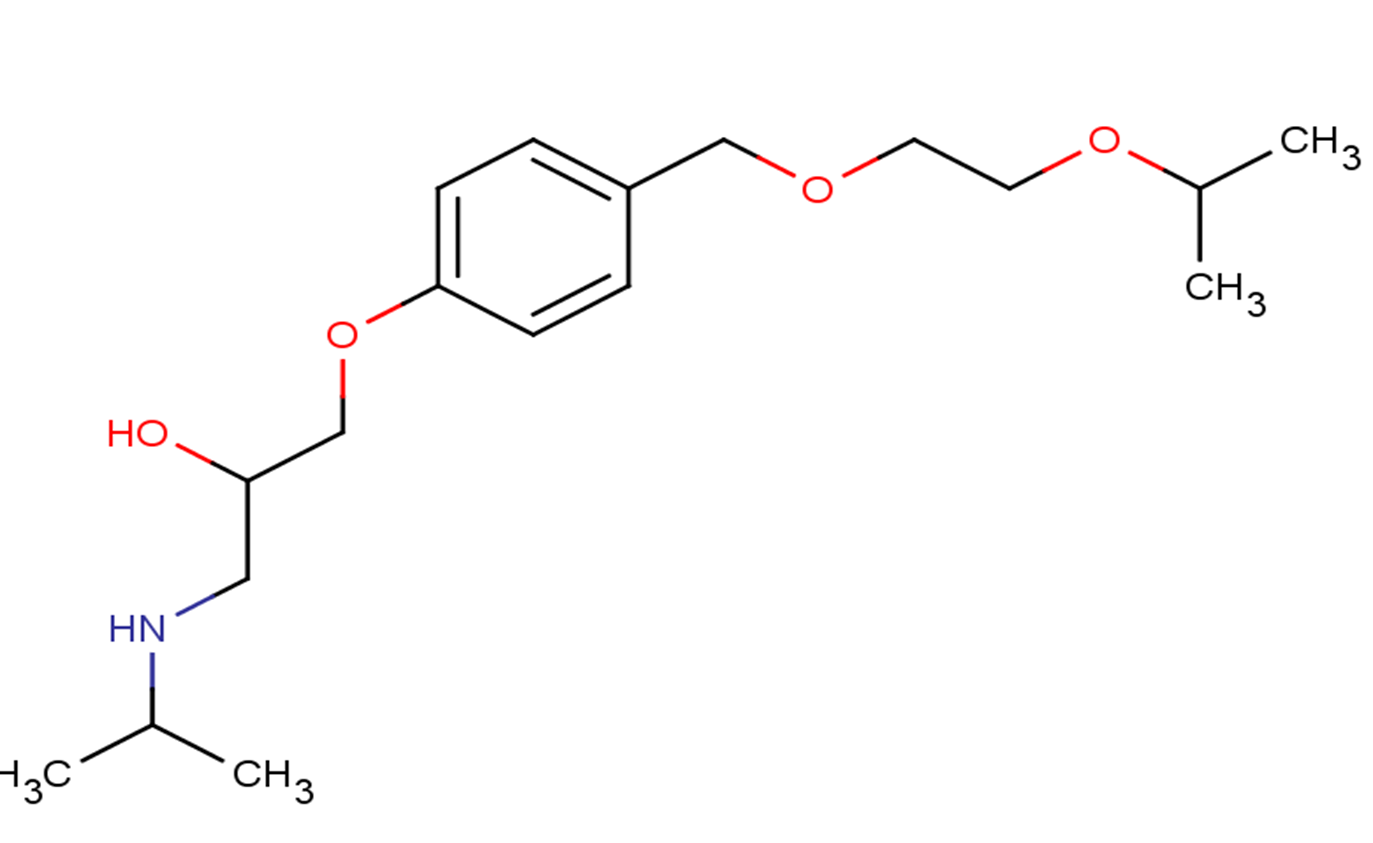
Bisoprolol
CAS No. 66722-44-9
Bisoprolol( —— )
Catalog No. M24680 CAS No. 66722-44-9
Bisoprolol is a cardioselective β1-adrenergic blocker used for secondary prevention of heart failure, myocardial, angina pectorisinfarction (MI) and mild to moderate hypertension.
Purity : >98% (HPLC)
 COA
Datasheet
HNMR
HPLC
MSDS
Handing Instructions
COA
Datasheet
HNMR
HPLC
MSDS
Handing Instructions
| Size | Price / USD | Stock | Quantity |
| 25MG | 49 | In Stock |


|
| 100MG | Get Quote | In Stock |
|
| 200MG | Get Quote | In Stock |
|
| 500MG | Get Quote | In Stock |
|
| 1G | Get Quote | In Stock |
|
Biological Information
-
Product NameBisoprolol
-
NoteResearch use only, not for human use.
-
Brief DescriptionBisoprolol is a cardioselective β1-adrenergic blocker used for secondary prevention of heart failure, myocardial, angina pectorisinfarction (MI) and mild to moderate hypertension.
-
DescriptionBisoprolol is a cardioselective β1-adrenergic blocker used for secondary prevention of heart failure, myocardial, angina pectorisinfarction (MI) and mild to moderate hypertension.(In Vitro):Bisoprolol hemifumarate (2 μM, 1 h) protects myocardial cells (H9c2) from ischemia/reperfusion (I/R) injury.Bisoprolol hemifumarate (2 μM, 1 h) reduces the H/R-induced ROS production and apoptosis in H9c2 cells.Bisoprolol hemifumarate (2 μM, 1 h) increases AKT and GSK3β phosphorylation in H9c2 cells.Bisoprolol hemifumarate (100 μM, 24 h) reverses Epinephrine-inhibited emigration in cholesterol-loaded DCs (dendritic cell) through increasing in β-arrestin 2, CCR7 and PI3K phosphorylation.(In Vivo):Bisoprolol hemifumarate (oral administration, 5 mg/kg, for 1 week) increases left ventricular ejection fraction (LVEF) and decreases the heart rate value.Bisoprolol hemifumarate (oral gavage, 8 mg/kg, daily for four weeks) shows protective effects against Cadmium-induced myocardial toxicity in rats.Bisoprolol hemifumarate (oral gavage, 1 mg/kg, daily for 6 weeks) reversessmall conductance calcium-activated potassium channel (SK) remodeling in a volume-overload rat model.
-
In VitroBisoprolol (2 μM, 1 h) protects myocardial cells (H9c2) from ischemia/reperfusion (I/R) injury.Bisoprolol (2 μM, 1 h) reduces the H/R-induced ROS production and apoptosis in H9c2 cells.Bisoprolol (2 μM, 1 h) increases AKT and GSK3β phosphorylation in H9c2 cells.Bisoprolol (100 μM, 24 h) reverses Epinephrine-inhibited emigration in cholesterol-loaded DCs (dendritic cell) through increasing in β-arrestin 2, CCR7 and PI3K phosphorylation. Cell Viability Assay Cell Line:H9c2 cells Concentration:0.2, 2, 20 μM Incubation Time:1 h Result:Elevated the survival rates of cardiomyocytes subjected to H/R (hypoxia/reoxygenation) to 73.20%, 90.38%, 81.25% respectively.Cell Migration Assay Cell Line:DCs Concentration:100 μM Incubation Time:6, 12, 24 h Result:Increased the amount of migrating cells by 46.00% (6 h), 64.25% (12 h) and 55.74% (24 h).
-
In VivoBisoprolol (oral administration, 5 mg/kg, for 1 week) increases left ventricular ejection fraction (LVEF) and decreases the heart rate value.Bisoprolol (oral gavage, 8 mg/kg, daily for four weeks) shows protective effects against Cadmium-induced myocardial toxicity in rats.Bisoprolol (oral gavage, 1 mg/kg, daily for 6 weeks) reverses small conductance calcium-activated potassium channel (SK) remodeling in a volume-overload rat model. Animal Model:Ischemia/reperfusion (I/R) injury rats Dosage:0.5, 5, 10 mg/kg Administration:Oral administration, for 1 week, prior to 0.5 h ischemia/4 hreperfusion.Result:Reduced infarct size from 44% in I/R group to 31% in treated group.Animal Model:Cadmium-induced rats Dosage:2, 8 mg/kg Administration:Oral gavage, daily for four weeks.Result:Decreased mean arterial pressure (MAP) at 8 mg/kg.Decreased serum biomarkers (ALT, AST) and NF-kB p65 expression and TNF-α levels (cardiac tissue samples) at 8 mg/kg.
-
Synonyms——
-
PathwayApoptosis
-
TargetAdenosine Receptor
-
Recptorβ1-adrenergic receptor
-
Research Area——
-
Indication——
Chemical Information
-
CAS Number66722-44-9
-
Formula Weight325.44
-
Molecular FormulaC18H31NO4
-
Purity>98% (HPLC)
-
SolubilityDMSO:10 mM
-
SMILESOC(CNC(C)C)COC1=CC=C(COCCOC(C)C)C=C1
-
Chemical Name——
Shipping & Storage Information
-
Storage(-20℃)
-
ShippingWith Ice Pack
-
Stability≥ 2 years
Reference
molnova catalog



related products
-
Adenosine A1 recepto...
Adenosine A1 receptor activator T62 is an allosteric enhancer of adenosine A1 receptor, and it produces antinociception in animal models of acute pain and also reduces hypersensitivity in models of inflammatory and nerve-injury pain[2][3].
-
Adenosine amine cong...
Adenosine amine congener (ADAC) is an agonist of selective A1 adenosine receptor.
-
N6-[2-(4-Aminophenyl...
A non-selective agonist of Adenosine A3 receptor; has a high affinity for the adenosine A1 and A3 receptors.
