


 Cart
Cart
 sales@molnova.com


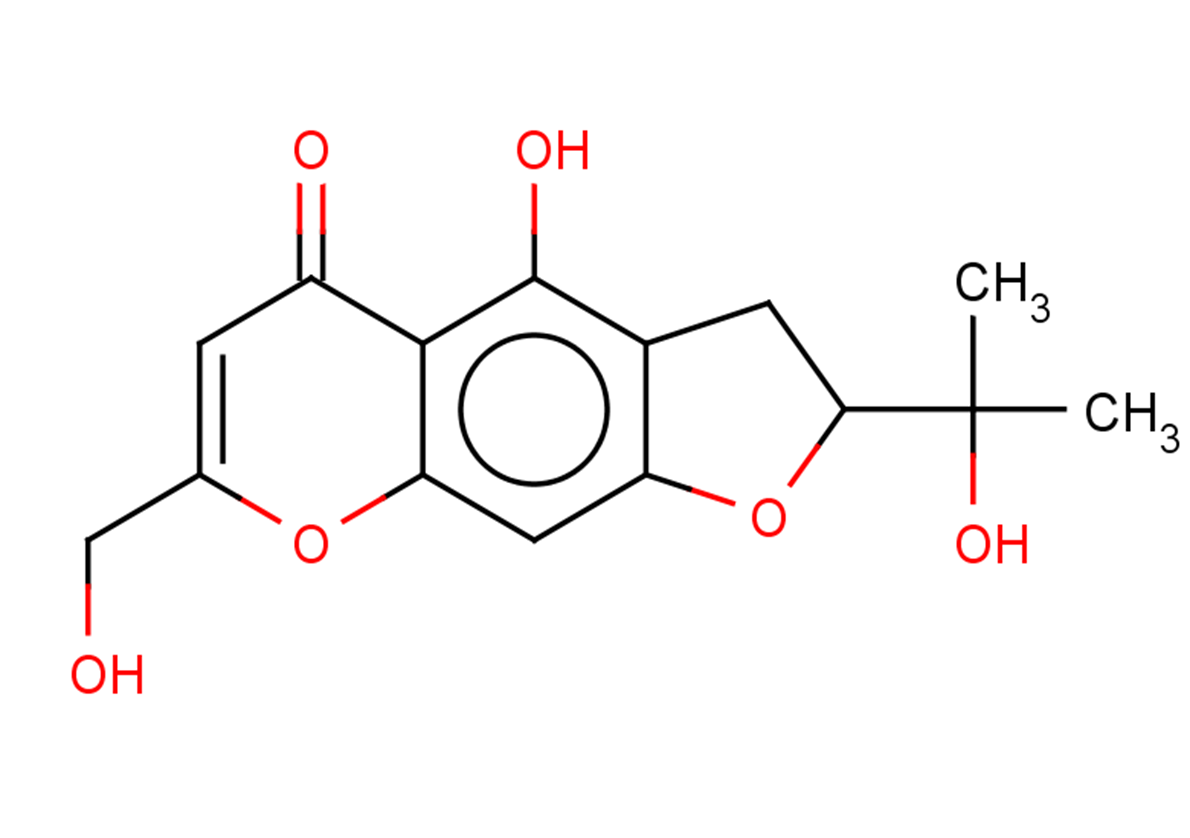
Angelicain
CAS No. 49624-66-0
Angelicain( Norcimifugin )
Catalog No. M24454 CAS No. 49624-66-0
Angelicain is a constituent of Cimicifuga foetida with anti-inflammatory activity.
Purity : >98% (HPLC)
 COA
Datasheet
HNMR
HPLC
MSDS
Handing Instructions
COA
Datasheet
HNMR
HPLC
MSDS
Handing Instructions
| Size | Price / USD | Stock | Quantity |
| 5MG | 149 | In Stock |


|
| 10MG | 255 | In Stock |
|
| 25MG | 431 | In Stock |
|
| 50MG | 619 | In Stock |
|
| 100MG | 861 | In Stock |
|
| 200MG | Get Quote | In Stock |
|
| 500MG | Get Quote | In Stock |
|
| 1G | Get Quote | In Stock |
|
Biological Information
-
Product NameAngelicain
-
NoteResearch use only, not for human use.
-
Brief DescriptionAngelicain is a constituent of Cimicifuga foetida with anti-inflammatory activity.
-
DescriptionAngelicain is a constituent of Cimicifuga foetida with anti-inflammatory activity.
-
In Vitro——
-
In Vivo——
-
SynonymsNorcimifugin
-
PathwayOthers
-
TargetOther Targets
-
RecptorOthers
-
Research Area——
-
Indication——
Chemical Information
-
CAS Number49624-66-0
-
Formula Weight292.3
-
Molecular FormulaC15H16O6
-
Purity>98% (HPLC)
-
SolubilityIn Vitro:?DMSO : 100 mg/mL (342.14 mM)
-
SMILESCC(C)(C(C1)Oc(cc2OC(CO)=C3)c1c(O)c2C3=O)O
-
Chemical Name——
Shipping & Storage Information
-
Storage(-20℃)
-
ShippingWith Ice Pack
-
Stability≥ 2 years
Reference



-
Lintuzumab
Lintuzumab (HuM-195) is a non-coupled humanized mouse monoclonal antibody directed against the cell-surface myelomonocyte differentiation antigen, CD33, with anti-leukemic activity that reduces the production of TNFα-induced pro-inflammatory cytokines and chemokines by AML cells.
-
fulvotomentoside A
Fulvotomentoside A could decrease overexpression of IL-6 and IL-17A, and increase the expression of specific transcription factor Foxp3 of regulatory T cells significantly in intestine.
-
L-Norvaline
Norvaline is a non-proteinogenic branched-chain amino acid. It has previously been reported to be a natural component of an antifungal peptide of Bacillus subtilis. Norvaline and other modified branched chain amino acids have received attention in recent studies as they appear to be incorporated in some recombinant proteins found in E. coli.
