


 Cart
Cart
 sales@molnova.com


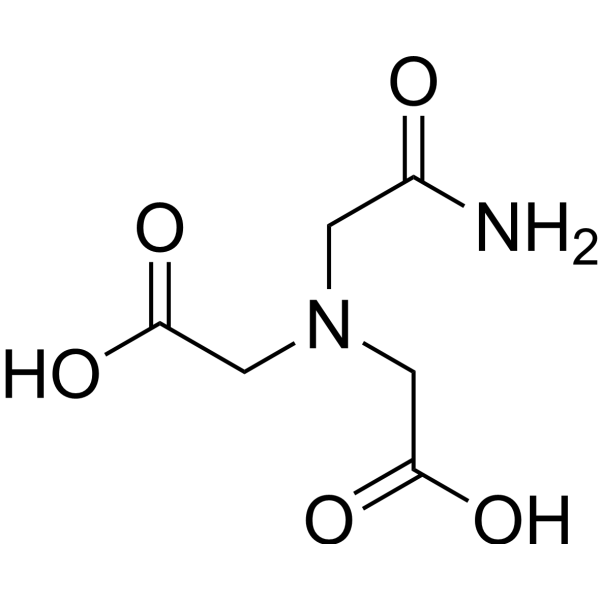
ADA
CAS No. 26239-55-4
ADA( N-(2-Acetamido)-2-Iminodiacetic acid )
Catalog No. M27566 CAS No. 26239-55-4
ADA is a biological buffer which can serve as a chelator.
Purity : >98% (HPLC)
 COA
Datasheet
HNMR
HPLC
MSDS
Handing Instructions
COA
Datasheet
HNMR
HPLC
MSDS
Handing Instructions
| Size | Price / USD | Stock | Quantity |
| 500MG | 36 | In Stock |


|
| 1G | Get Quote | In Stock |
|
Biological Information
-
Product NameADA
-
NoteResearch use only, not for human use.
-
Brief DescriptionADA is a biological buffer which can serve as a chelator.
-
DescriptionADA is a biological buffer which can serve as a chelator.
-
In Vitro——
-
In Vivo——
-
SynonymsN-(2-Acetamido)-2-Iminodiacetic acid
-
PathwayOthers
-
TargetOther Targets
-
RecptorNCX3
-
Research Area——
-
Indication——
Chemical Information
-
CAS Number26239-55-4
-
Formula Weight190.155
-
Molecular FormulaC6H10N2O5
-
Purity>98% (HPLC)
-
SolubilityIn Vitro:?H2O : 5 mg/mL (26.30 mM)
-
SMILESNC(=O)CN(CC(O)=O)CC(O)=O
-
Chemical Name——
Shipping & Storage Information
-
Storage(-20℃)
-
ShippingWith Ice Pack
-
Stability≥ 2 years
Reference
1.Takahiro Iwamoto, et al. YM-244769, a Novel Na + /Ca 2+ Exchange Inhibitor That Preferentially Inhibits NCX3, Efficiently Protects Against hypoxia/reoxygenation-induced SH-SY5Y Neuronal Cell Damage. Mol Pharmacol. 2006 Dec;70(6):2075-83.
molnova catalog



related products
-
1,16-Hexadecanediol
1,16-Hexadecanediol has low toxicity and can be used to make resins and nanomaterials.
-
Trigonelline
Trigonelline, an alkaloid with potential antidiabetic activity, is present in considerable amounts in coffee.
-
AGI-25696
AGI-25696 is an inhibitor of methionine adenosyltransferase 2A (MATA2).
