


 Cart
Cart
 sales@molnova.com


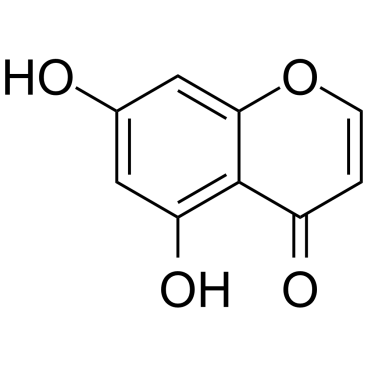
5,7-Dihydroxychromone
CAS No. 31721-94-5
5,7-Dihydroxychromone( —— )
Catalog No. M18417 CAS No. 31721-94-5
5, 7-Dihydroxychromone isolated from DME is one of the active compounds that may contribute to regulate blood glucose levels.
Purity : >98% (HPLC)
 COA
Datasheet
HNMR
HPLC
MSDS
Handing Instructions
COA
Datasheet
HNMR
HPLC
MSDS
Handing Instructions
| Size | Price / USD | Stock | Quantity |
| 5MG | 72 | In Stock |


|
| 10MG | 115 | In Stock |
|
| 25MG | 197 | In Stock |
|
| 50MG | 293 | In Stock |
|
| 100MG | 437 | In Stock |
|
| 500MG | 954 | In Stock |
|
| 1G | Get Quote | In Stock |
|
Biological Information
-
Product Name5,7-Dihydroxychromone
-
NoteResearch use only, not for human use.
-
Brief Description5, 7-Dihydroxychromone isolated from DME is one of the active compounds that may contribute to regulate blood glucose levels.
-
Description5, 7-Dihydroxychromone isolated from DME is one of the active compounds that may contribute to regulate blood glucose levels. 5, 7-Dihydroxychromone exerts neuroprotective effect against 6-OHDA-induced oxidative stress and apoptosis by activating Nrf2/ARE signal. 5, 7-Dihydroxychromone induces the translocation of Nrf2 to the nucleus and increases Nrf2/ARE binding activity which results in the up-regulation of the expression of Nrf2-dependent antioxidant genes, including HO-1, NQO1, and GCLc.
-
In Vitro——
-
In Vivo——
-
Synonyms——
-
PathwayOthers
-
TargetOther Targets
-
RecptorNrf2
-
Research AreaOthers-Field
-
Indication——
Chemical Information
-
CAS Number31721-94-5
-
Formula Weight178.14
-
Molecular FormulaC9H6O4
-
Purity>98% (HPLC)
-
SolubilityIn Vitro:?DMSO : 100 mg/mL (561.36 mM)
-
SMILESC1=COC2=CC(=CC(=C2C1=O)O)O
-
Chemical Name——
Shipping & Storage Information
-
Storage(-20℃)
-
ShippingWith Ice Pack
-
Stability≥ 2 years
Reference
molnova catalog



related products
-
Dicentrine
Dicentrine, (-)- is an aporphinic alkaloid found in several plant species, which showed significant antinociceptive activity in an acute model of visceral pain in mice.
-
11-oxo Mogroside V
11-oxo Mogroside V is a sweet tasting cucurbitane glycoside derivative of mogroside V. It has antioxidant effects against both O2- and OH- and prevents OH-induced DNA damage.
-
CPS-11
CPS-11 (N-(Hydroxymethyl)thalidomide) is a Thalidomide analogue with significant antitumor activity, exhibiting a broader and more potent effect on the MM (multiple myeloma) cell line.
