


 Cart
Cart
 sales@molnova.com


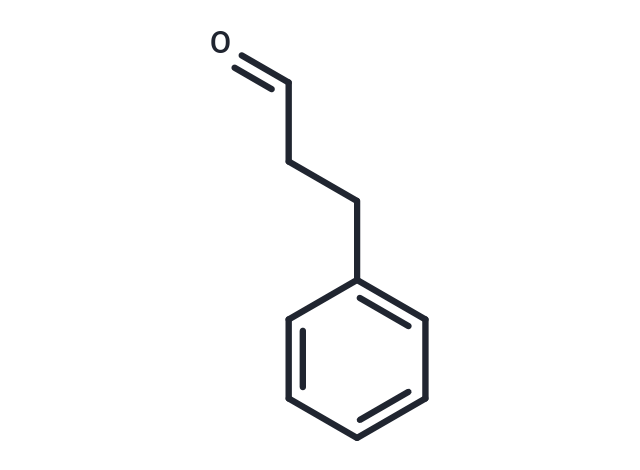
3-Phenylpropanal
CAS No. 104-53-0
3-Phenylpropanal( —— )
Catalog No. M33664 CAS No. 104-53-0
3-Phenylpropanal (Phenylpropyl aldehyde) is a RIFM flavor ingredient and can be used to make perfume.3-Phenylpropanal is the main ingredient in acaricides.
Purity : >98% (HPLC)
 COA
Datasheet
HNMR
HPLC
MSDS
Handing Instructions
COA
Datasheet
HNMR
HPLC
MSDS
Handing Instructions
| Size | Price / USD | Stock | Quantity |
| 5MG | 48 | In Stock |


|
| 10MG | 67 | In Stock |
|
| 25MG | 104 | In Stock |
|
| 50MG | 154 | In Stock |
|
| 100MG | 223 | In Stock |
|
| 500MG | 557 | In Stock |
|
| 1G | Get Quote | In Stock |
|
Biological Information
-
Product Name3-Phenylpropanal
-
NoteResearch use only, not for human use.
-
Brief Description3-Phenylpropanal (Phenylpropyl aldehyde) is a RIFM flavor ingredient and can be used to make perfume.3-Phenylpropanal is the main ingredient in acaricides.
-
Description3-Phenylpropanal (Phenylpropyl aldehyde) is a RIFM flavor ingredient and can be used to make perfume.3-Phenylpropanal is the main ingredient in acaricides.3-Phenylpropanal can be used as a fly attractant.3-Phenylpropanal can be used as an insecticide.
-
In Vitro——
-
In Vivo——
-
Synonyms——
-
PathwayOthers
-
TargetOther Targets
-
RecptorOthers
-
Research Area——
-
Indication——
Chemical Information
-
CAS Number104-53-0
-
Formula Weight134.18
-
Molecular FormulaC9H10O
-
Purity>98% (HPLC)
-
Solubility——
-
SMILESO=CCCc1ccccc1
-
Chemical Name——
Shipping & Storage Information
-
Storage(-20℃)
-
ShippingWith Ice Pack
-
Stability≥ 2 years
Reference



-
Vilobelimab
Vilobelimab (CaCP-29, IFX-1), a monoclonal antibody targeting C5a, inhibits this pro-inflammatory complement component, which is pivotal in causing organ dysfunction.
-
(Iso)-MS4322
(Iso)-MS4322 ((Iso)-YS43-22) is a selective and potent protein arginine methyltransferase 5 (PRMT5) degrader with potential anticancer activity that effectively reduces PRMT5 protein levels in MCF-7 cells and inhibits the growth of a wide range of cancer cells.
-
Ethylmalonic acid
Ethylmalonic acid can be found in blood cerebrospinal fluid (CSF) and urine as well as in human fibroblasts prostate and skeletal muscle tissues. Moreover ethylmalonic acid is found to be associated with anorexia nervosa and malonyl-CoA decarboxylase deficiency. Ethylmalonic acid is a non-carcinogenic potentially toxic compound.
