


 Cart
Cart
 sales@molnova.com


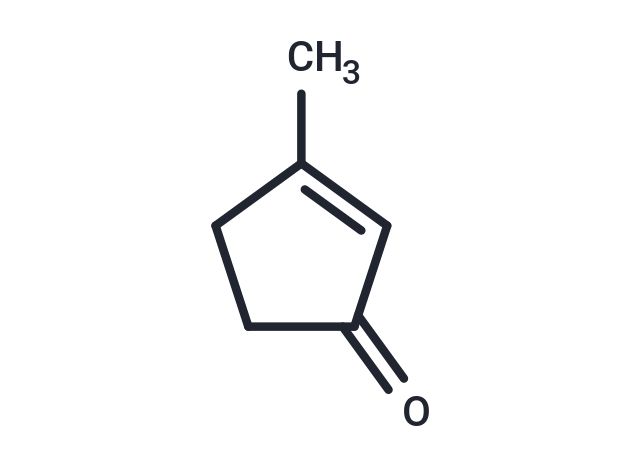
3-Methyl-2-cyclopenten-1-one
CAS No. 2758-18-1
3-Methyl-2-cyclopenten-1-one( —— )
Catalog No. M34919 CAS No. 2758-18-1
3-Methyl-2-cyclopenten-1-one, used as a food additive to enhance the flavor of meat and meat products at 2-5 ppm, demonstrated gastric cytoprotective activity when administered orally to male Wistar rats.
Purity : >98% (HPLC)
 COA
Datasheet
HNMR
HPLC
MSDS
Handing Instructions
COA
Datasheet
HNMR
HPLC
MSDS
Handing Instructions
| Size | Price / USD | Stock | Quantity |
| 500MG | 37 | In Stock |


|
| 1G | Get Quote | In Stock |
|
Biological Information
-
Product Name3-Methyl-2-cyclopenten-1-one
-
NoteResearch use only, not for human use.
-
Brief Description3-Methyl-2-cyclopenten-1-one, used as a food additive to enhance the flavor of meat and meat products at 2-5 ppm, demonstrated gastric cytoprotective activity when administered orally to male Wistar rats.
-
Description3-Methyl-2-cyclopenten-1-one is an endogenous metabolite.
-
In Vitro——
-
In Vivo——
-
Synonyms——
-
PathwayProteasome/Ubiquitin
-
TargetEndogenous Metabolite
-
RecptorEndogenous Metabolite
-
Research Area——
-
Indication——
Chemical Information
-
CAS Number2758-18-1
-
Formula Weight96.13
-
Molecular FormulaC6H8O
-
Purity>98% (HPLC)
-
SolubilityIn Vitro:?DMSO : 100 mg/mL (1040.26 mM; Ultrasonic )
-
SMILESCC1=CC(=O)CC1
-
Chemical Name——
Shipping & Storage Information
-
Storage(-20℃)
-
ShippingWith Ice Pack
-
Stability≥ 2 years
Reference
molnova catalog



related products
-
p-Toluic Acid
p-Toluic Acid belongs to the class of organic compounds known as benzoic acids. 4-Methylbenzoic acid has been primarily detected in saliva.
-
Hydroxyphenylacetylg...
Hydroxyphenylacetylglycine (p-Hydroxyphenylacetylglycine) is an endogenous human metabolite.
-
3-Nitro-L-tyrosine
3-Nitrotyrosine is the major product from the spontaneous reaction of peroxynitrite with tyrosine. Formation of nitrotyrosine can indicate the formation of peroxynitrite by a nitric oxide (NO)-dependent oxidative damage.
