


 Cart
Cart
 sales@molnova.com


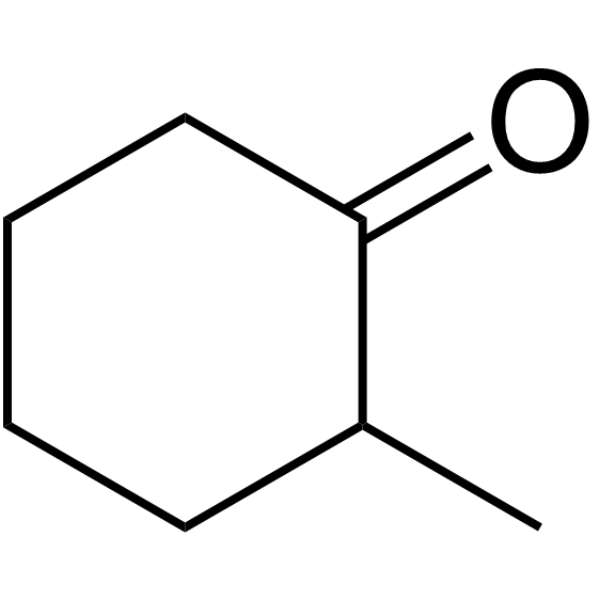
2-Methylcyclohexanone
CAS No. 583-60-8
2-Methylcyclohexanone( —— )
Catalog No. M28092 CAS No. 583-60-8
2-Methylcyclohexanone is an endogenous metabolite.
Purity : >98% (HPLC)
 COA
Datasheet
HNMR
HPLC
MSDS
Handing Instructions
COA
Datasheet
HNMR
HPLC
MSDS
Handing Instructions
| Size | Price / USD | Stock | Quantity |
| 5MG | 49 | In Stock |


|
| 100MG | Get Quote | In Stock |
|
| 200MG | Get Quote | In Stock |
|
| 500MG | Get Quote | In Stock |
|
| 1G | Get Quote | In Stock |
|
Biological Information
-
Product Name2-Methylcyclohexanone
-
NoteResearch use only, not for human use.
-
Brief Description2-Methylcyclohexanone is an endogenous metabolite.
-
Description2-Methylcyclohexanone is an endogenous metabolite.
-
In Vitro——
-
In Vivo——
-
Synonyms——
-
PathwayProteasome/Ubiquitin
-
TargetEndogenous Metabolite
-
RecptorS1PR1|S1PR3
-
Research Area——
-
Indication——
Chemical Information
-
CAS Number583-60-8
-
Formula Weight112.172
-
Molecular FormulaC7H12O
-
Purity>98% (HPLC)
-
SolubilityIn Vitro:?DMSO : 100 mg/mL (891.50 mM)
-
SMILESCC1CCCCC1=O
-
Chemical Name——
Shipping & Storage Information
-
Storage(-20℃)
-
ShippingWith Ice Pack
-
Stability≥ 2 years
Reference
1.Bell M, et al. Discovery of Soft-Drug Topical Tool Modulators of Sphingosine-1-phosphate Receptor 1 (S1PR1). ACS Med Chem Lett. 2019 Feb 14;10(3):341-347.
molnova catalog



related products
-
Octadecanedioic acid
Octadecanedioic acid is an endogenous metabolite, is a long-chain dicarboxylic acid.
-
L-(-)-Arabitol
L-Arabinitol is a potential biomarker for the comsuption of the food products such as sweet potato deerberry moth bean and is also associated with Alzheimer's disease and ribose-5-phosphate isomerase deficiency.
-
L-Galactose
L-Galactose (Galactose, L-) is a natural product that is widely found in plants and animals. L-Galactose has been shown to be a key intermediate in the molecular pathway for the conversion of D-glucose to oxalic acid in Pistia stratiotes.
