


 Cart
Cart
 sales@molnova.com


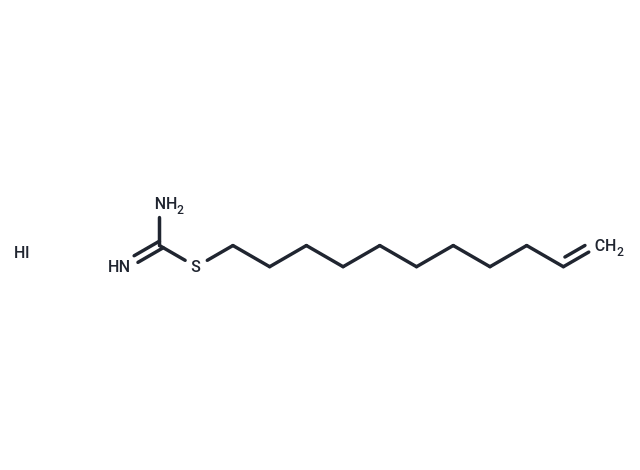
Isothiuronium
CAS No. 22584-04-9
Isothiuronium( —— )
Catalog No. M34629 CAS No. 22584-04-9
Isothiuronium (AHR 1911) is a protein synthesis inhibitor with antimicrobial and anti-inflammatory activity that induces apoptosis and reduces melanoma cell invasion, and can be used in dermatitis research.
Purity : >98% (HPLC)
 COA
Datasheet
HNMR
HPLC
MSDS
Handing Instructions
COA
Datasheet
HNMR
HPLC
MSDS
Handing Instructions
| Size | Price / USD | Stock | Quantity |
| 2MG | 59 | Get Quote |


|
| 5MG | 85 | Get Quote |
|
| 10MG | 136 | Get Quote |
|
| 25MG | 219 | Get Quote |
|
| 50MG | 328 | Get Quote |
|
| 100MG | 476 | Get Quote |
|
| 500MG | Get Quote | Get Quote |
|
| 1G | Get Quote | Get Quote |
|
Biological Information
-
Product NameIsothiuronium
-
NoteResearch use only, not for human use.
-
Brief DescriptionIsothiuronium (AHR 1911) is a protein synthesis inhibitor with antimicrobial and anti-inflammatory activity that induces apoptosis and reduces melanoma cell invasion, and can be used in dermatitis research.
-
DescriptionIsothiuronium (AHR 1911) is a protein synthesis inhibitor with antimicrobial and anti-inflammatory activity that induces apoptosis and reduces melanoma cell invasion, and can be used in dermatitis research.
-
In Vitro——
-
In Vivo——
-
Synonyms——
-
PathwayMicrobiology/Virology
-
TargetAntibiotic
-
RecptorAntibiotic
-
Research Area——
-
Indication——
Chemical Information
-
CAS Number22584-04-9
-
Formula Weight356.31
-
Molecular FormulaC12H25IN2S
-
Purity>98% (HPLC)
-
Solubility——
-
SMILESI.N=C(SCCCCCCCCCC=C)N
-
Chemical Name——
Shipping & Storage Information
-
Storage(-20℃)
-
ShippingWith Ice Pack
-
Stability≥ 2 years
Reference
molnova catalog



related products
-
CORM-401
CORM-401 is an oxidant-sensitive CO-releasing molecule used in the research of oxidative stress-mediated pathologies and inflammation [inflammatory].
-
VP-4604
VP-4604 is a potent anti-methicillin-resistant Staphylococcus aureus (MRSA) compound that exhibited significant microbial growth inhibition against S. aureus with an MIC of 4-8 μg/mL and a growth inhibition rate of over 95%.
-
Tinidazole
Tinidazole is a synthesized imidazole derivative used in antiprotozoal treatment with antiamebic and antibacterial properties.
